
Z naszego bloga
-
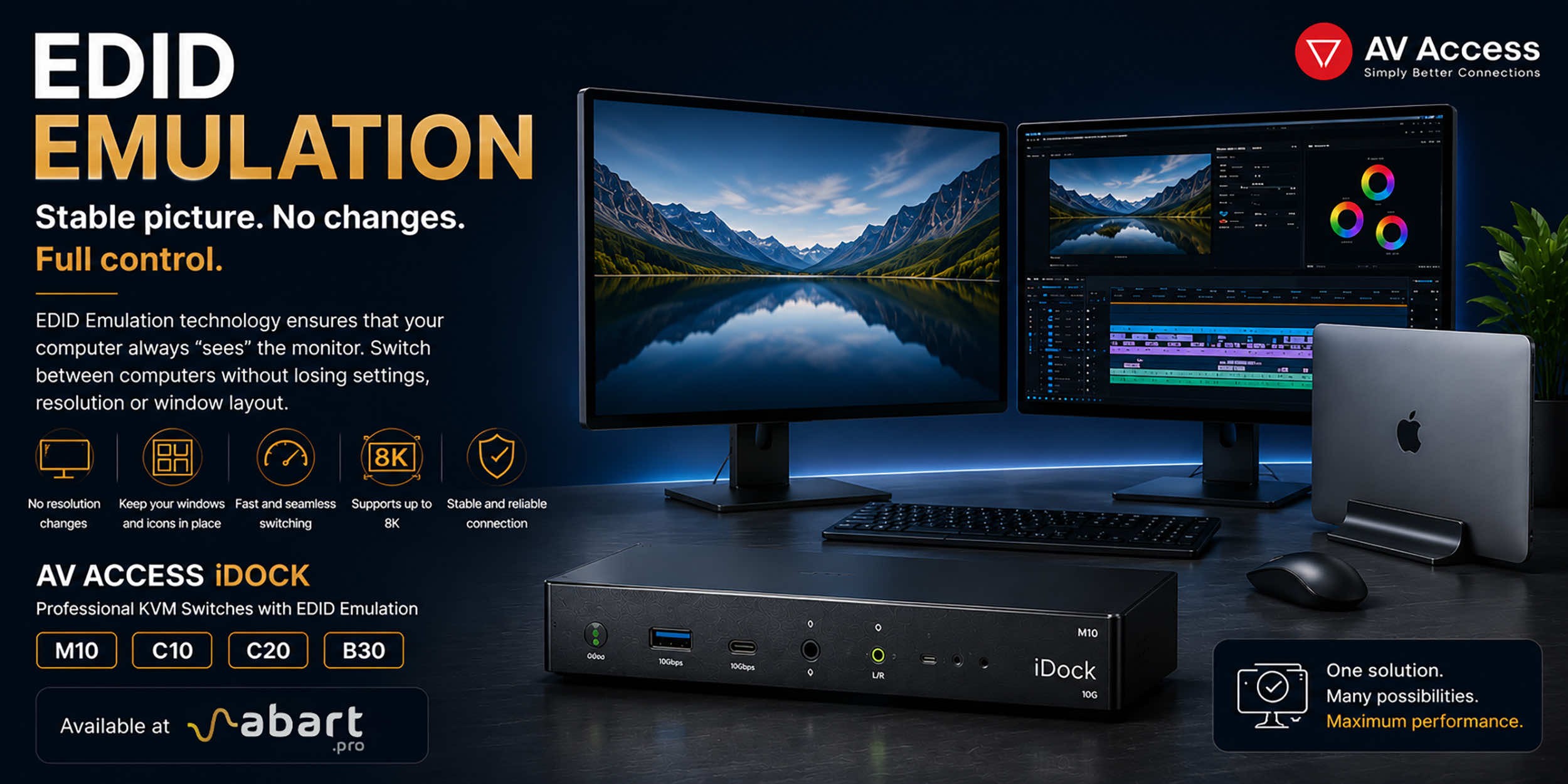 EDID Emulation – What Is It and Why Should You Choose AV...
When working with multiple computers using a KVM switch, one of the most common issues is the need to re-detect the monitor after switching the signal source. This can result in changes to the resolution, icons shifting on the desktop, application windows moving to different locations, and sometimes even a temporary loss of the image. The solution to this problem is EDID Emulation technology, available in professional AV Access iDock KVM switches offered by Abart Pro.
-
 Internet światłowodowy 2 Gb/s, 8 Gb/s i więcej w Polsce –...
Just a few years ago, 1 Gb/s fiber-optic Internet seemed like a solution reserved for the most demanding business users. Today, the situation is completely different. More and more providers in Poland are offering connections exceeding 1 Gb/s, and Internet access with speeds of 2 Gb/s or even 8 Gb/s is becoming a reality for both home users and professionals.
-
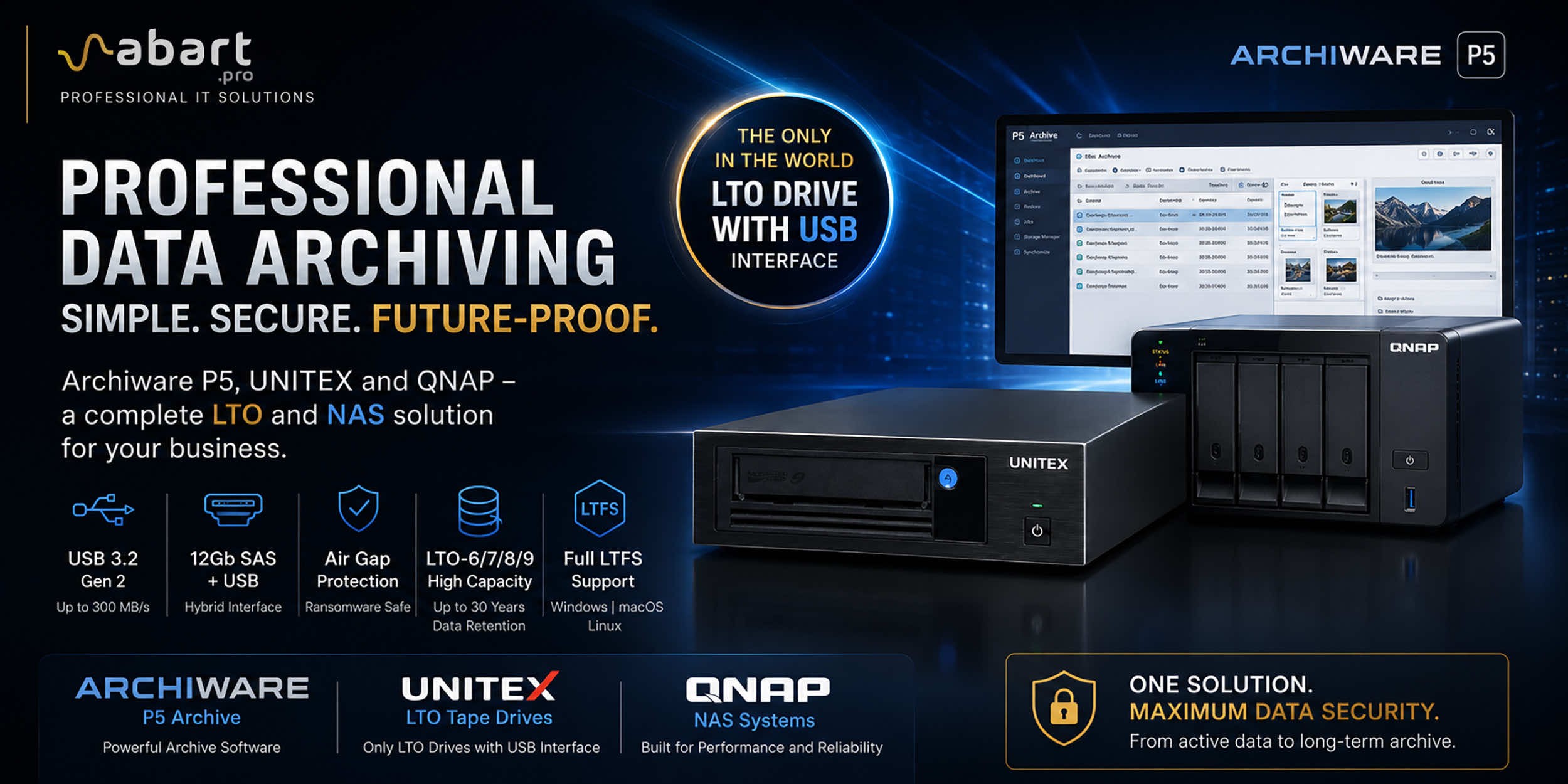 Archiware P5, UNITEX, and QNAP – a complete solution for...
Data Archiving Without Compromise – Archiware P5, UNITEX, and QNAP Create a Comprehensive Data Protection Environment In an era of growing data volumes and increasingly frequent ransomware threats, professional archiving is becoming an essential component of IT infrastructure. Companies involved in film production, photography, CAD design, scientific research, and public administration need a solution that is secure, easy to use, and cost-effective. The combination of Archiware P5 software, UNITEX LTO external drives, and QNAP NAS servers creates a comprehensive environment for long-term data archiving, eliminating many of the limitations of traditional solutions.
-
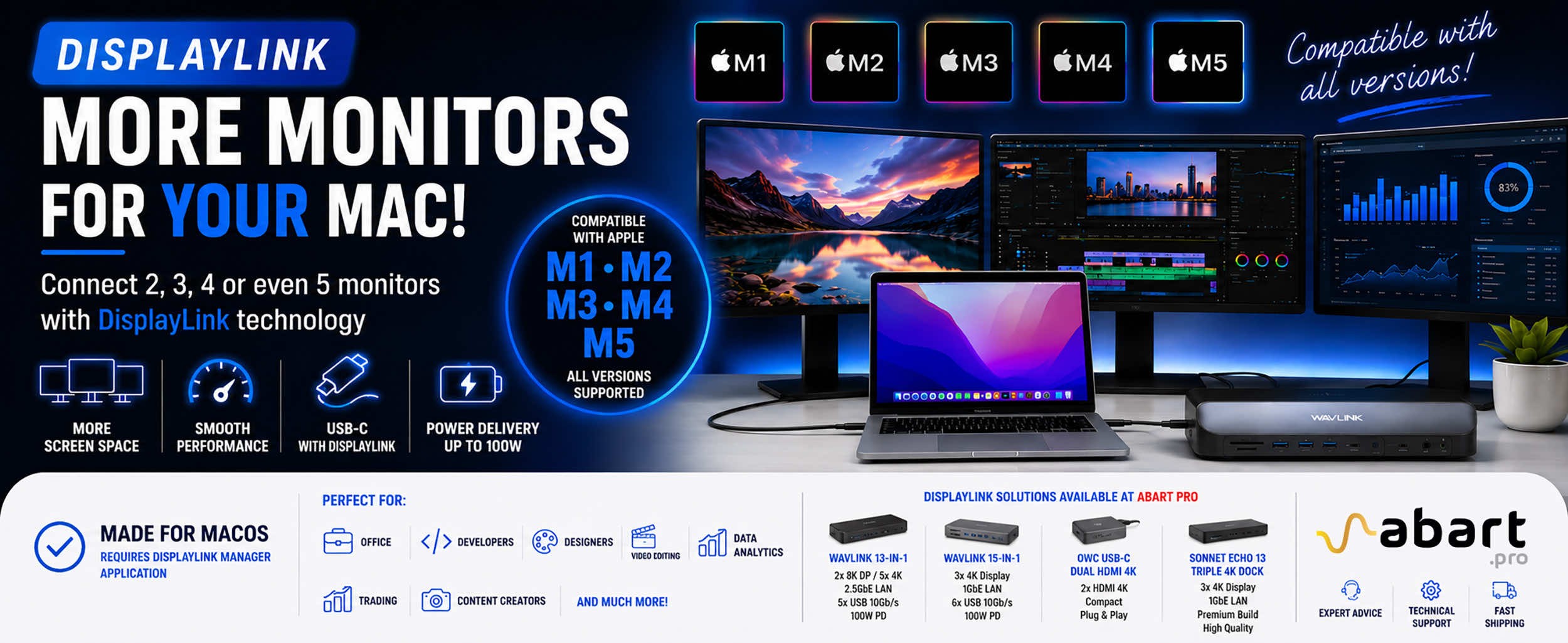 DisplayLink – How to Connect More Monitors to Apple Mac...
DisplayLink is a technology that easily expands the workspace of Apple Mac computers running macOS, PCs running Windows, and devices running ChromeOS and Android without compromising image quality or the performance of your Mac
Blog categories
Search in blog
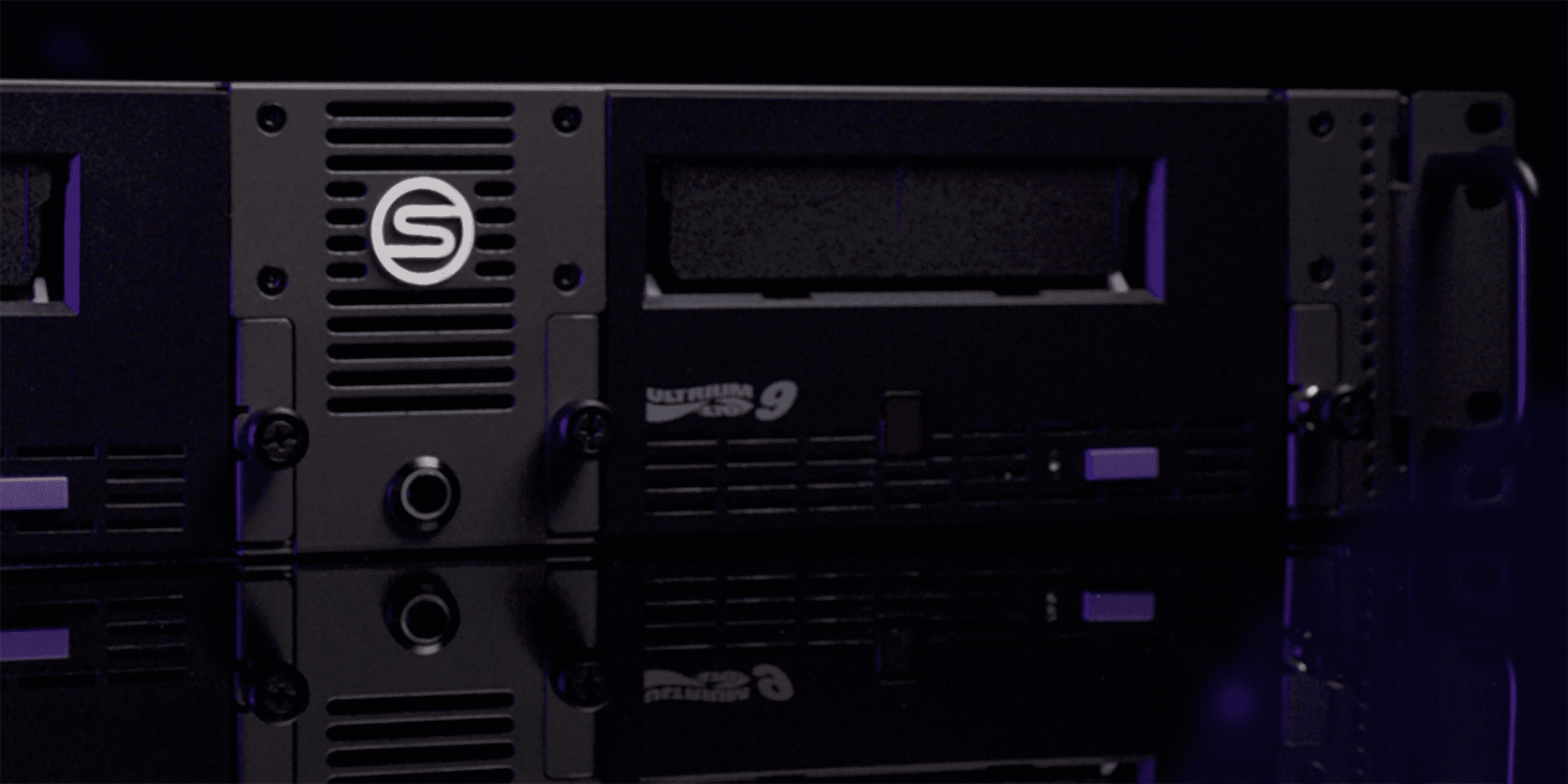
Use and storage of LTO tapes
LTO (Linear Tape-Open) tapes are data storage media used primarily for archiving and backing up large amounts of data. They are popular in corporate environments, research institutions and wherever long-term data storage is needed in a secure and cost-effective manner.
Here are the main applications of LTO tapes:
1. data archiving
LTO tapes are ideal for long-term storage of data that does not need to be read frequently, but must be preserved for many years (e.g., legal documents, medical data, corporate archives, research materials). Due to their high durability (up to 30 years with proper storage), LTO tapes are often chosen for archival purposes.
2 Data backup
LTO tapes are widely used for backing up large data sets, such as in data centers, IT companies and scientific institutions. They are particularly useful for data that does not need to be available immediately, but must be protected in case of system failure.
3 Storing large amounts of data
LTO tapes offer high capacity (up to tens of terabytes in the latest generations, such as LTO-9), making them an economical solution for storing huge data sets. They are cheaper per gigabyte than hard disk drives (HDDs) or SSDs.
4 Data security
LTO tapes are immune to cyber attacks such as ransomware because they are disconnected from the system after data is written. Many LTO tapes offer a data encryption feature, further enhancing the security of stored information.
5 Transferring data
LTO tapes are sometimes used to physically transfer large amounts of data between locations (known as “sneakernet”), such as in the absence of a high-speed Internet connection.
6 Media and entertainment applications
The film, television and music industries use LTO tapes to store large media files, such as uncompressed video, audio and graphic designs.
7. energy savings
LTO tapes use much less energy than hard drives because they do not require constant power. Data is stored offline, reducing operating costs.
8. regulatory compliance
Many industries (e.g., medical, financial) require long-term data storage in compliance with regulations. LTO tapes meet these requirements by offering durability and reliability.
LTO tapes are a reliable, cost-effective and secure solution for storing large amounts of data, especially in cases where long-term archiving, backup or protecting data from loss is a priority. They are particularly popular in corporate, scientific and media environments.
To properly store LTO (Linear Tape-Open) tapes and ensure their long-term reliability, the following guidelines should be followed:
1. temperature:
Long-term storage: 16-25°C (61-77°F)
Short-term storage: 5-32°C (41-90°F).
Avoid rapid changes in temperature.
2 Relative humidity:
Optimum humidity: 20-50%
Avoid humidity above 80%, which can lead to mold growth and tape damage.
3. storage environment:
Store tapes in a dry, clean place, away from sources of dust, dirt and debris.
Avoid exposing the tapes to sunlight, which can cause overheating and material degradation.
4 Magnetic field:
LTO tapes are sensitive to magnetic fields, so store them away from devices that emit strong magnetic fields, such as speakers, electric motors or transformers.
5 Storage position:
Tapes should be stored upright (on the long side) to avoid deformation and to ensure even pressure on the tape surface.
6. packaging:
Tapes should be stored in original packaging or in special tape storage containers to protect them from dust, moisture and mechanical damage.
7 Cleaning and maintenance:
Make sure the tapes are clean and dry before storage.
Regularly check the condition of the tapes, especially if they have been stored for a long time.
8. Life cycle:
LTO tapes have a limited number of read/write cycles and a finite lifespan. Regularly archive data to new media to avoid data loss due to tape wear.
9 Access Control:
Limit access to tapes to authorized personnel to minimize the risk of data damage or loss.
Following these rules will help ensure that LTO tapes perform reliably for many years and that the data stored on them remains safe.
Related posts
-
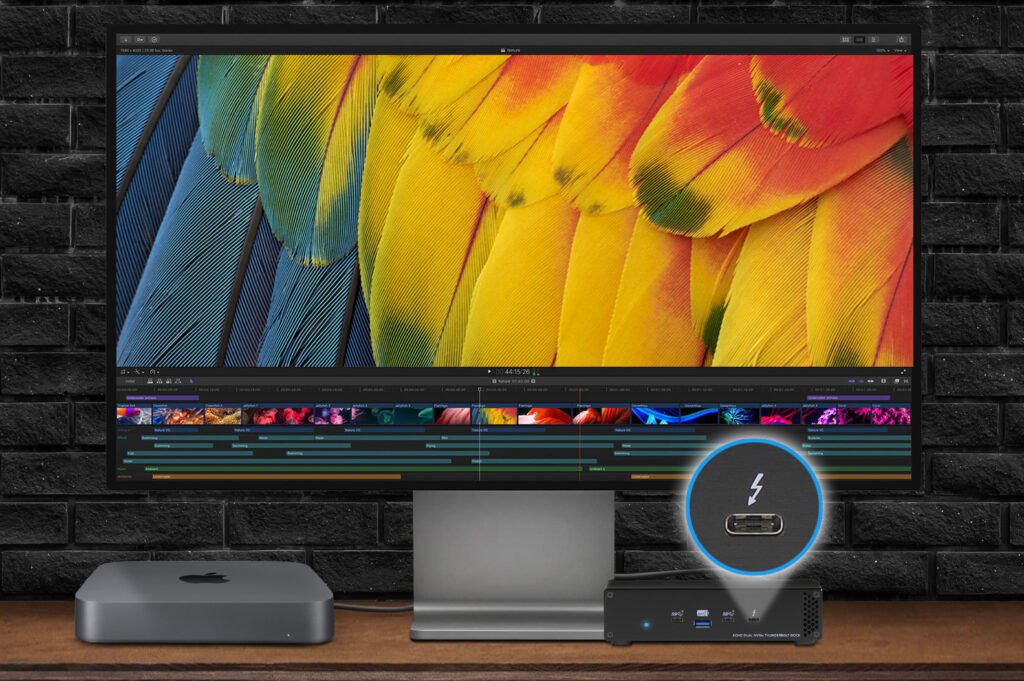 Nowość! Stacja dokująca od Sonnet z dwoma zatokami na dyski NVMe
Sonnet has released the latest docking station enabling the installation of two PCIe NVMe M.2 2280 drives with a...Read more
Nowość! Stacja dokująca od Sonnet z dwoma zatokami na dyski NVMe
Sonnet has released the latest docking station enabling the installation of two PCIe NVMe M.2 2280 drives with a...Read more -
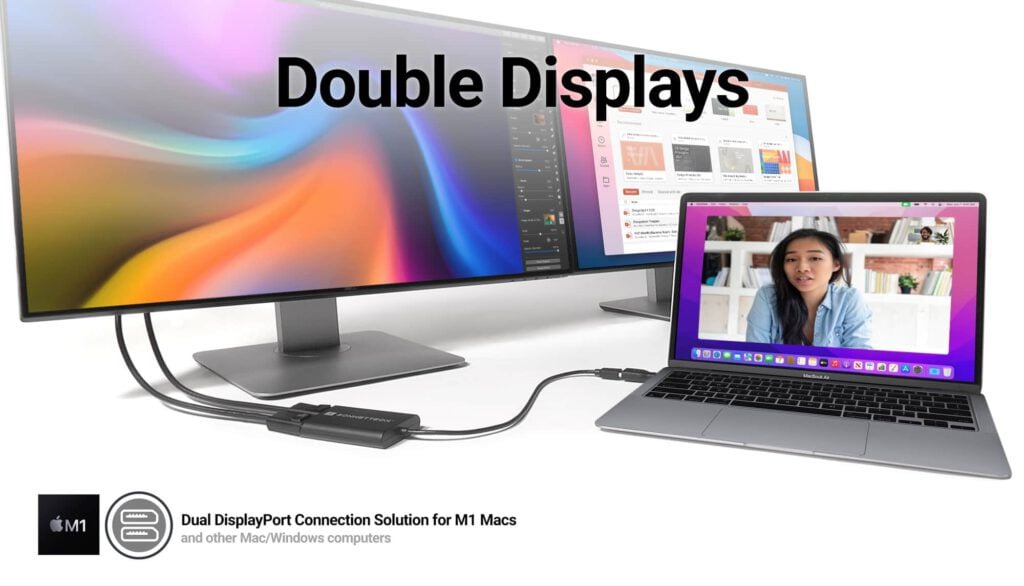 Trzy wyświetlacze do Apple Mac z M1/M2/M3? To nie problem!
We know perfectly well how good Apple processors from the M1, M2 and M3 families are. These systems used in Apple...Read more
Trzy wyświetlacze do Apple Mac z M1/M2/M3? To nie problem!
We know perfectly well how good Apple processors from the M1, M2 and M3 families are. These systems used in Apple...Read more -
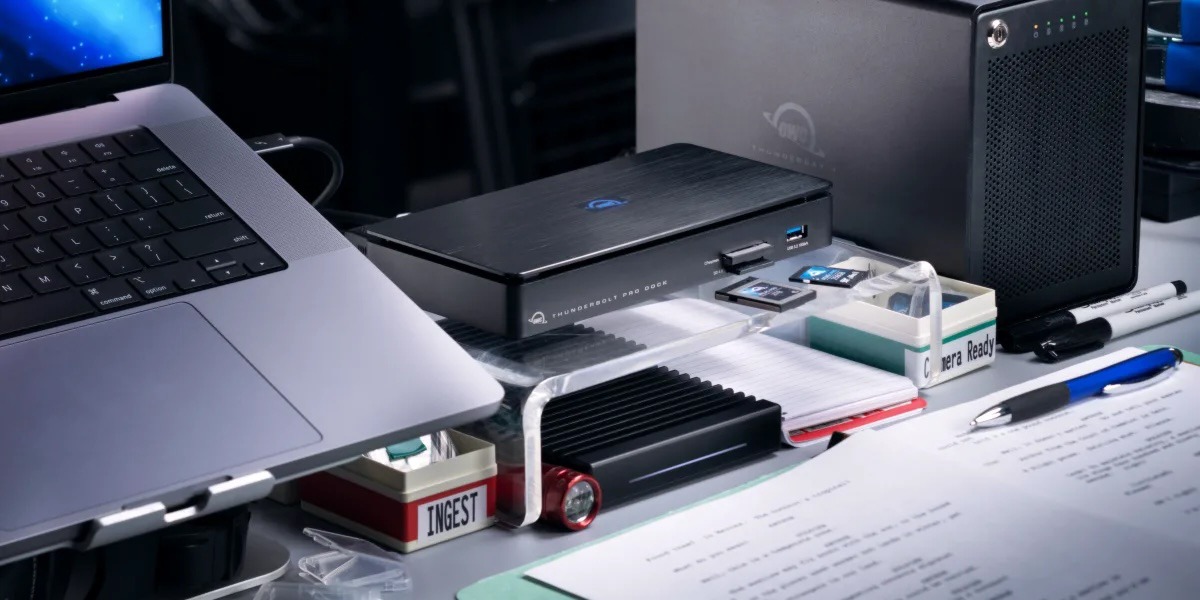 OWC Thunderbolt Pro Dock - The best docking station for professional developers
OWC Thunderbolt Pro Dock – high throughput and flexibility for demanding professionals working with high resolution...Read more
OWC Thunderbolt Pro Dock - The best docking station for professional developers
OWC Thunderbolt Pro Dock – high throughput and flexibility for demanding professionals working with high resolution...Read more -
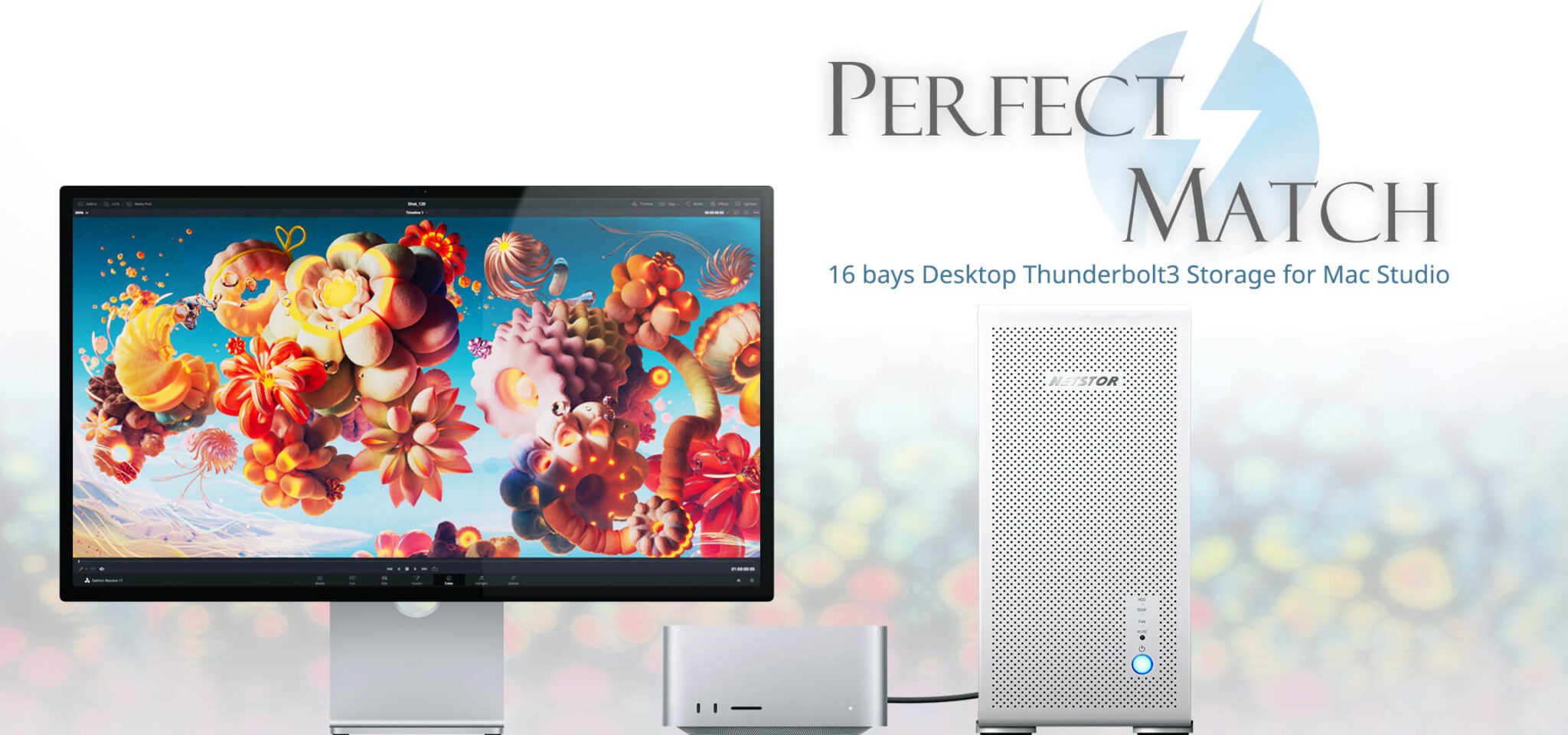 Do 320TB w sprzętowym RAID poprzez port Thunderbolt. Z Mac Studio idealna para!
Netstor NS780TB3 is a 16-bay enclosure that allows you to connect up to 320TB of fast mass storage to a computer...Read more
Do 320TB w sprzętowym RAID poprzez port Thunderbolt. Z Mac Studio idealna para!
Netstor NS780TB3 is a 16-bay enclosure that allows you to connect up to 320TB of fast mass storage to a computer...Read more -
 Nowe NASy od TerraMaster z 2x 2,5GbE i zatokami na 2x M.2 SSD
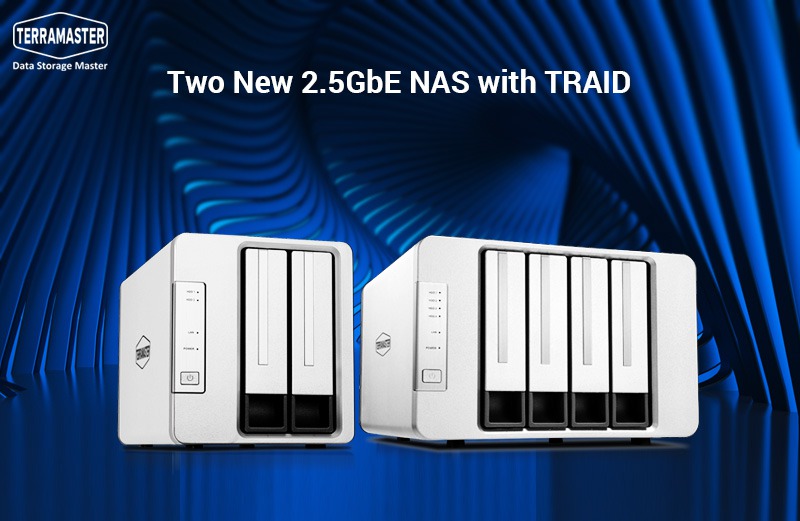
The new TerraMaster F2-223 and F4-223 NAS devices support TRAID. This is a flexible disk array management tool...Read more
Nowe NASy od TerraMaster z 2x 2,5GbE i zatokami na 2x M.2 SSD
The new TerraMaster F2-223 and F4-223 NAS devices support TRAID. This is a flexible disk array management tool...Read more
Leave a comment