
Z naszego bloga
-
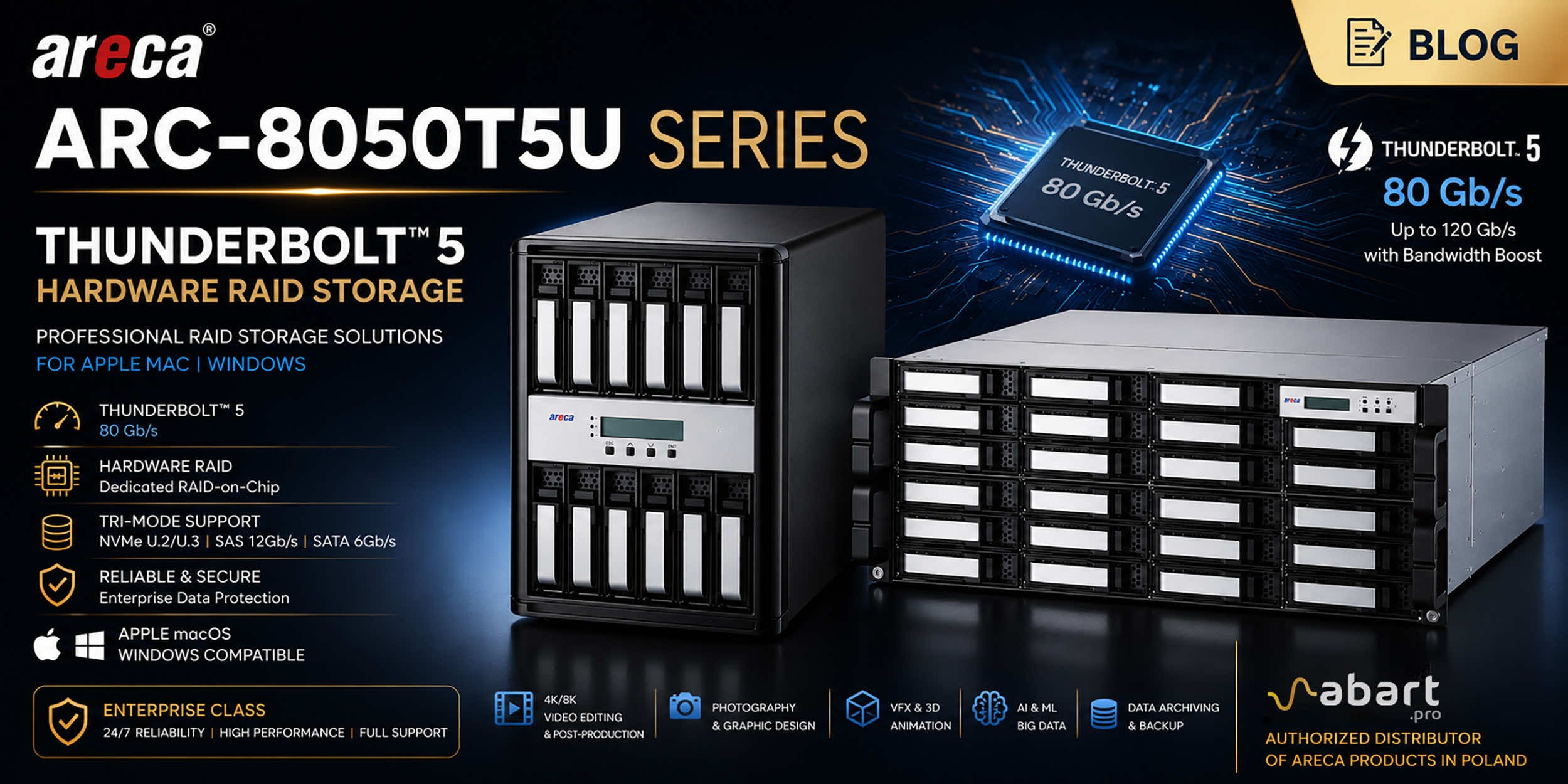 Thunderbolt™ 5 and Hardware RAID – Why Is the Areca...
Professional storage enters a new era. Just a few years ago, most professional Apple users opted for external SSDs or simple RAID enclosures connected via Thunderbolt 3. These solutions were sufficient for working with Full HD footage or individual 4K projects, but the advancement of digital cameras, high-resolution photography, and increasingly demanding applications has led to a significant rise in storage requirements.
-
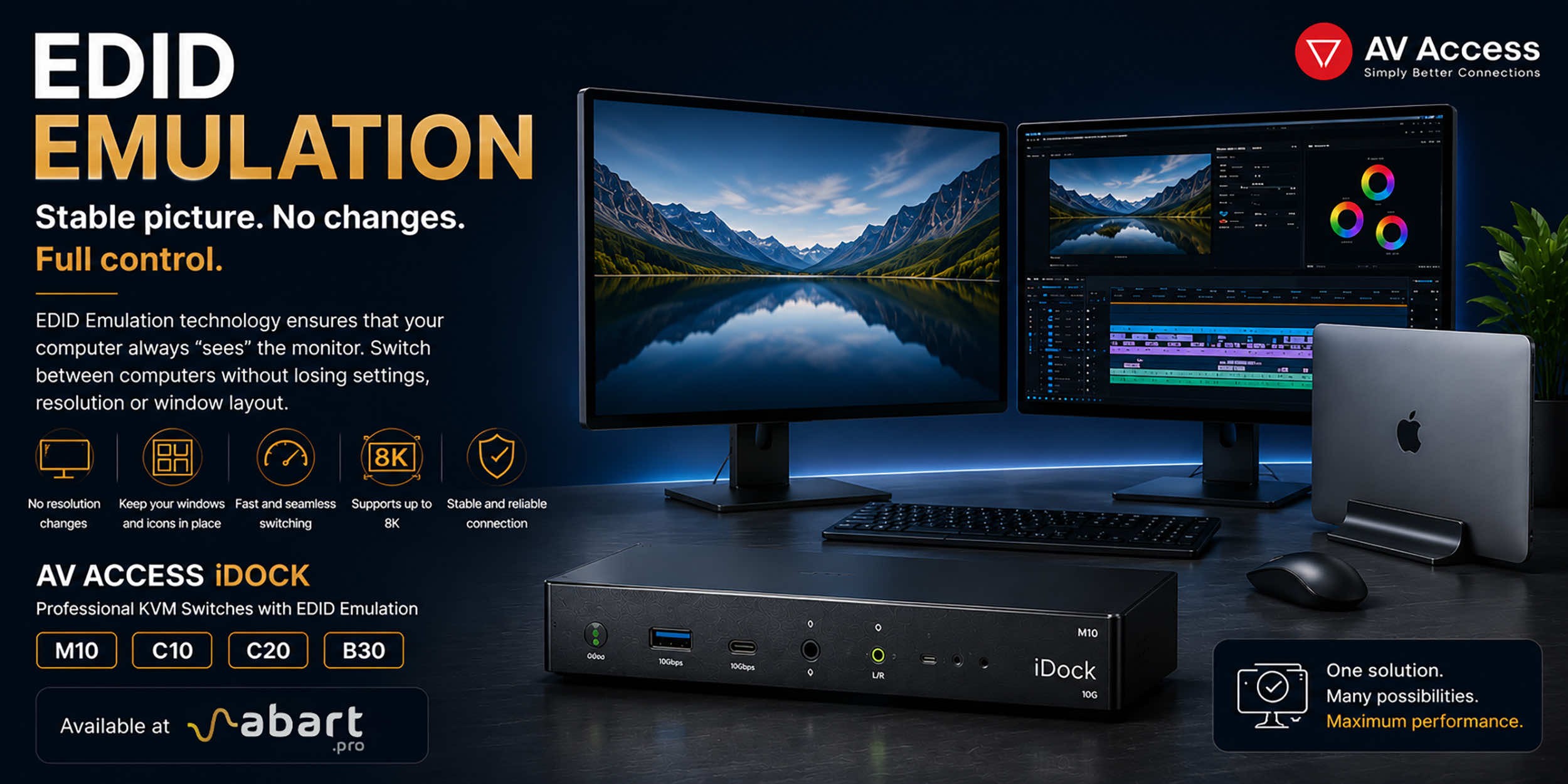 EDID Emulation – What Is It and Why Should You Choose AV...
When working with multiple computers using a KVM switch, one of the most common issues is the need to re-detect the monitor after switching the signal source. This can result in changes to the resolution, icons shifting on the desktop, application windows moving to different locations, and sometimes even a temporary loss of the image. The solution to this problem is EDID Emulation technology, available in professional AV Access iDock KVM switches offered by Abart Pro.
-
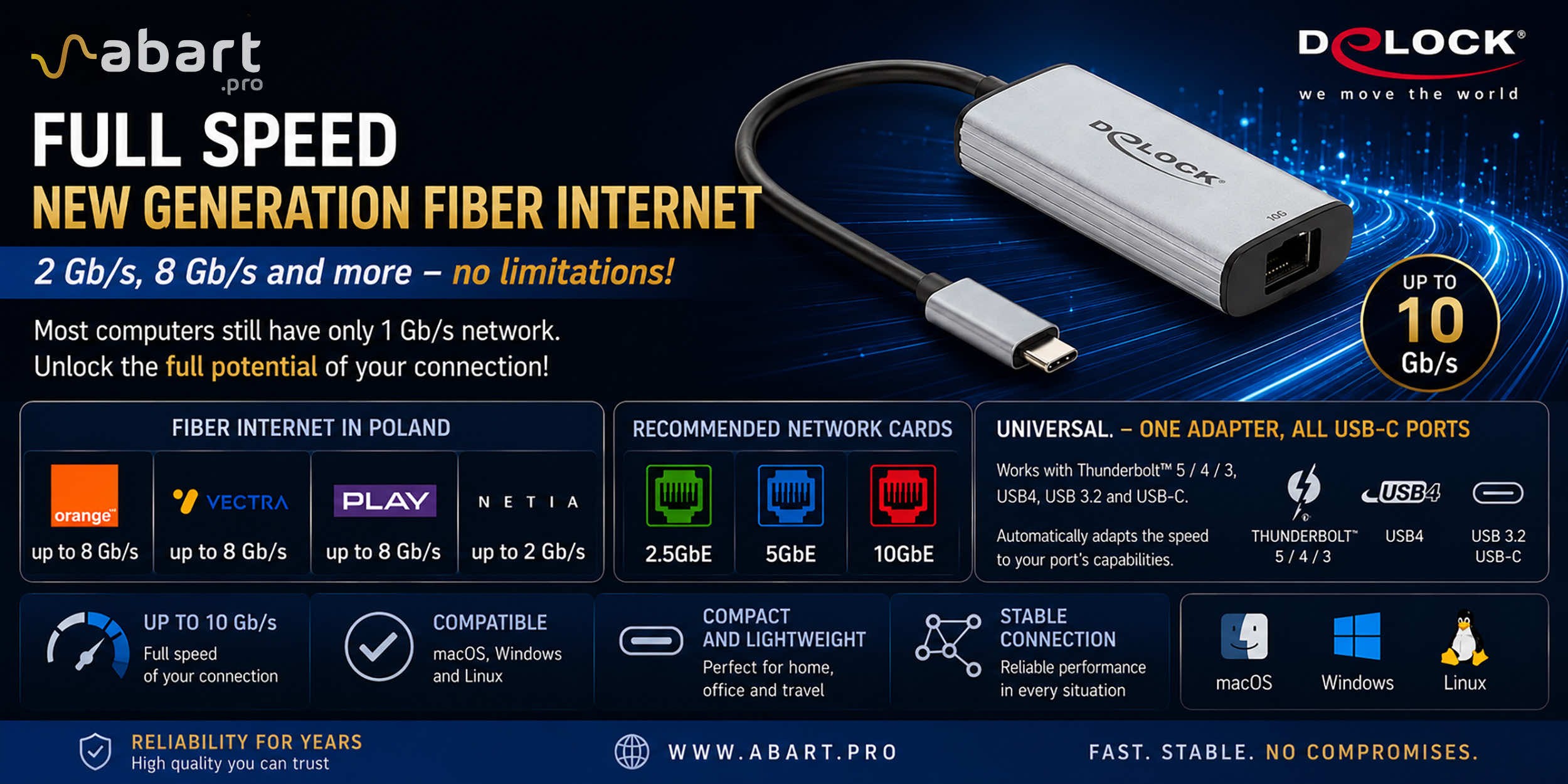 Internet światłowodowy 2 Gb/s, 8 Gb/s i więcej w Polsce –...
Just a few years ago, 1 Gb/s fiber-optic Internet seemed like a solution reserved for the most demanding business users. Today, the situation is completely different. More and more providers in Poland are offering connections exceeding 1 Gb/s, and Internet access with speeds of 2 Gb/s or even 8 Gb/s is becoming a reality for both home users and professionals.
-
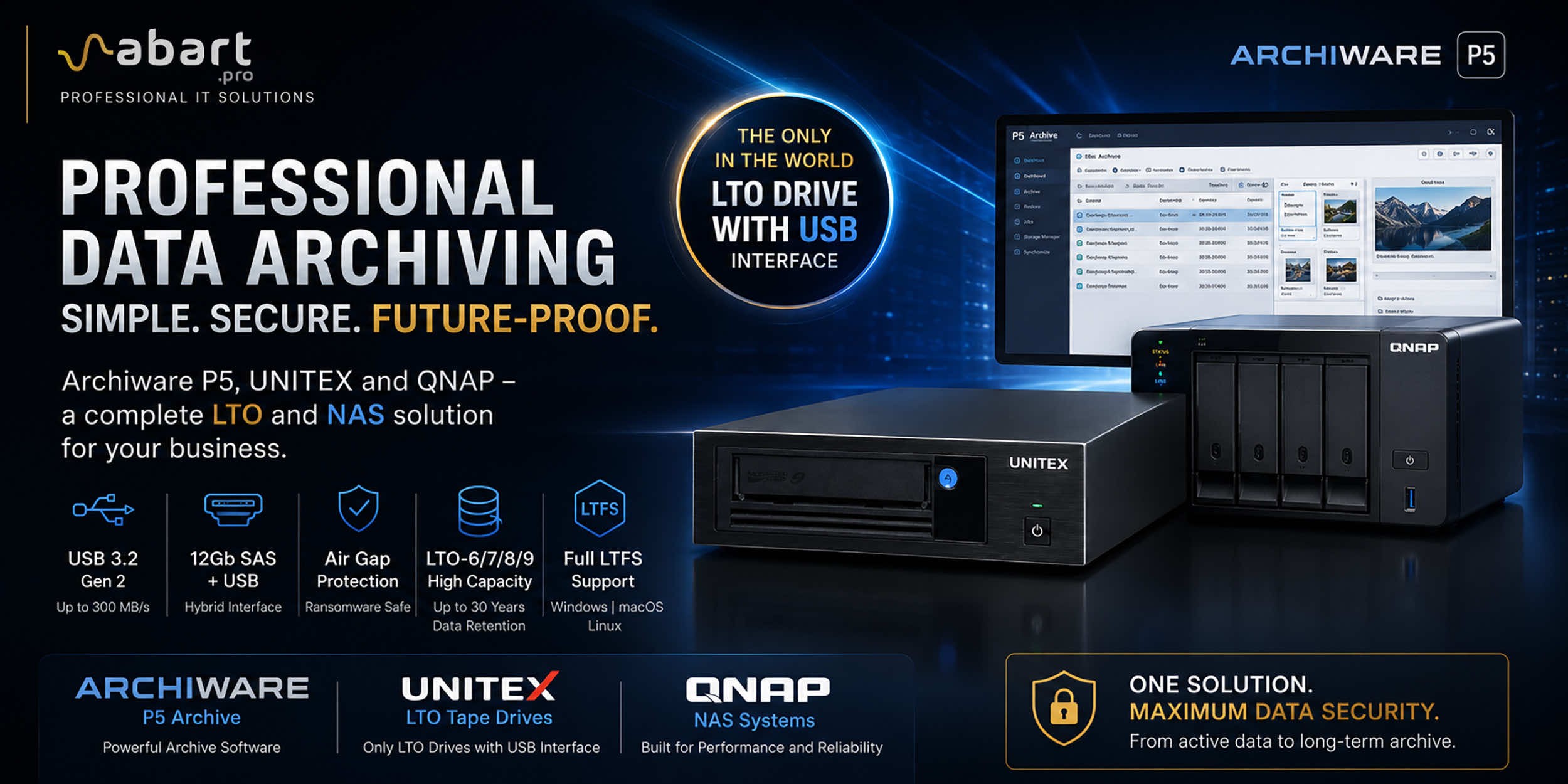 Archiware P5, UNITEX, and QNAP – a complete solution for...
Data Archiving Without Compromise – Archiware P5, UNITEX, and QNAP Create a Comprehensive Data Protection Environment In an era of growing data volumes and increasingly frequent ransomware threats, professional archiving is becoming an essential component of IT infrastructure. Companies involved in film production, photography, CAD design, scientific research, and public administration need a solution that is secure, easy to use, and cost-effective. The combination of Archiware P5 software, UNITEX LTO external drives, and QNAP NAS servers creates a comprehensive environment for long-term data archiving, eliminating many of the limitations of traditional solutions.
Blog categories
Search in blog
AV Over IP
AV over IP (Audio-Video over Internet Protocol) is a technology that allows audio and video signals to be transmitted over standard IP (Internet Protocol) networks, such as local area networks (LANs) or broadband Internet networks. This technology makes it possible to replace traditional AV systems that rely on specialised cabling (e.g. HDMI, SDI) with a more flexible and scalable solution based on network infrastructure.
Key elements of AV over IP
Encoding and decoding (Encoders/Decoders):
Encoders: devices or software that convert audio and video signals into IP packets. These packets can then be transmitted over an IP network.
Decoders: Devices or software that receive IP packets and convert them back into traditional audio and video signals.
Network infrastructure
Network switches (Switches): Manage the movement of data packets across the network, ensuring a smooth flow of AV signals.
Routers: They route data packets to the appropriate destinations on the network.
Controllers
AV over IP management systems that allow the entire system to be configured, monitored and managed from one central point.
Advantages of AV over IP
Flexibility and scalability
Easily add new devices and change configurations without the need to physically modify cabling.
Cost savings
Reduced installation and maintenance costs, especially in large systems, by using the existing network infrastructure.
Central management
Ability to remotely manage and monitor the entire AV system, increasing operational efficiency.
Interoperability
Easy integration with other IP systems such as security, building automation, conferencing systems, etc.
Challenges of AV over IP:
Quality of Service (QoS):
Ensuring adequate transmission quality to avoid delays and data losses that can affect video and audio quality.
Security
Protection against cyber attacks and unauthorised access to networks and AV signals.
Network requirements
The need for a sufficiently powerful network infrastructure to cope with the high bandwidth requirements associated with the transmission of audio and video signals.
AV over IP applications
Meeting rooms and lecture theatres: Distribution of presentation and educational content.
Sports and entertainment venues: Live transmission to various screens and sound systems.
Security systems: Integration with IP cameras and other monitoring equipment.
Corporate television: Distribution of internal content within companies.
AV over IP is a state-of-the-art solution that brings many benefits due to its flexibility, scalability and ability to integrate with other network systems, making it increasingly popular in a variety of industries and applications.


