
Z naszego bloga
-
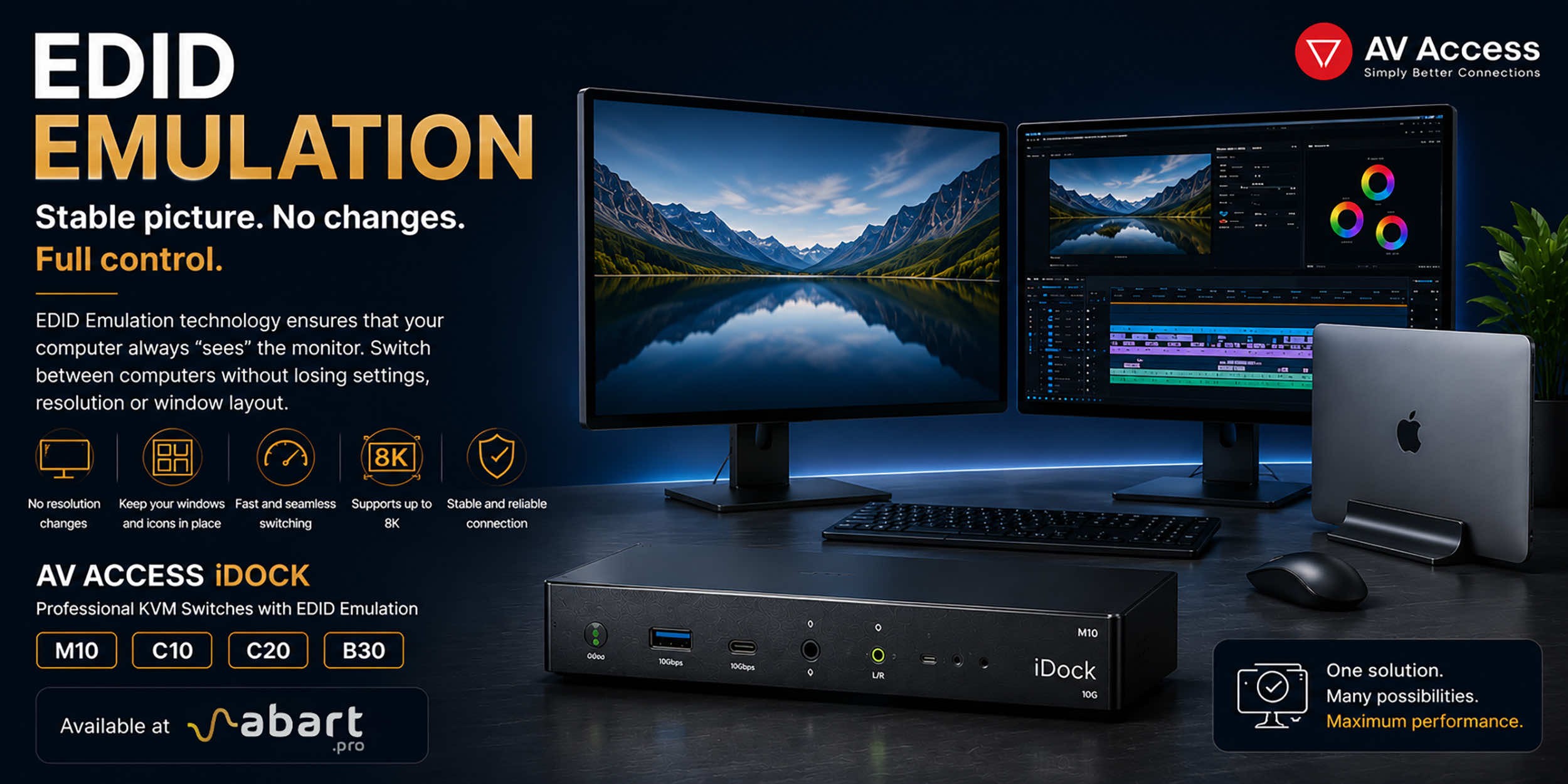 EDID Emulation – What Is It and Why Should You Choose AV...
When working with multiple computers using a KVM switch, one of the most common issues is the need to re-detect the monitor after switching the signal source. This can result in changes to the resolution, icons shifting on the desktop, application windows moving to different locations, and sometimes even a temporary loss of the image. The solution to this problem is EDID Emulation technology, available in professional AV Access iDock KVM switches offered by Abart Pro.
-
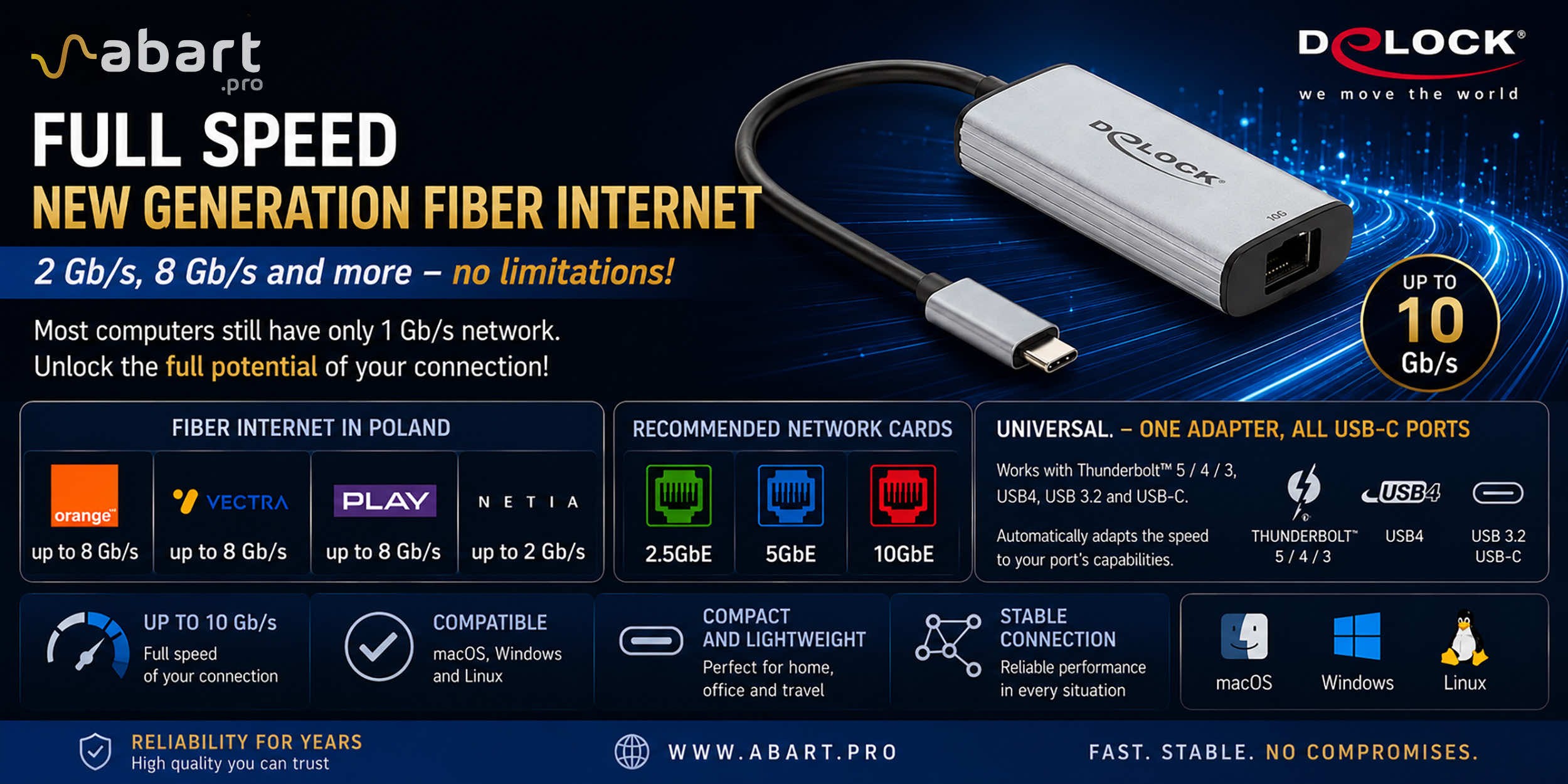 Internet światłowodowy 2 Gb/s, 8 Gb/s i więcej w Polsce –...
Just a few years ago, 1 Gb/s fiber-optic Internet seemed like a solution reserved for the most demanding business users. Today, the situation is completely different. More and more providers in Poland are offering connections exceeding 1 Gb/s, and Internet access with speeds of 2 Gb/s or even 8 Gb/s is becoming a reality for both home users and professionals.
-
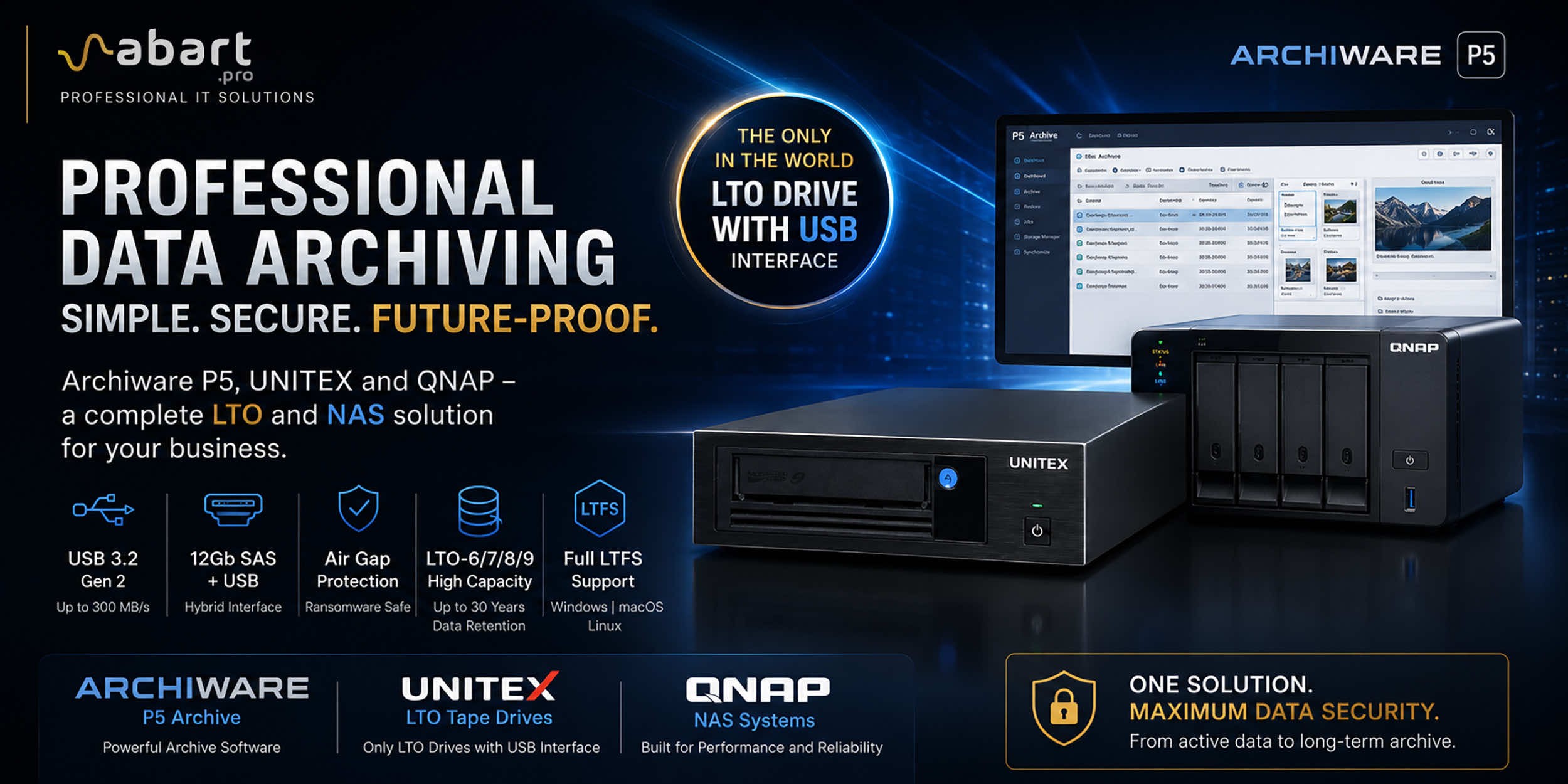 Archiware P5, UNITEX, and QNAP – a complete solution for...
Data Archiving Without Compromise – Archiware P5, UNITEX, and QNAP Create a Comprehensive Data Protection Environment In an era of growing data volumes and increasingly frequent ransomware threats, professional archiving is becoming an essential component of IT infrastructure. Companies involved in film production, photography, CAD design, scientific research, and public administration need a solution that is secure, easy to use, and cost-effective. The combination of Archiware P5 software, UNITEX LTO external drives, and QNAP NAS servers creates a comprehensive environment for long-term data archiving, eliminating many of the limitations of traditional solutions.
-
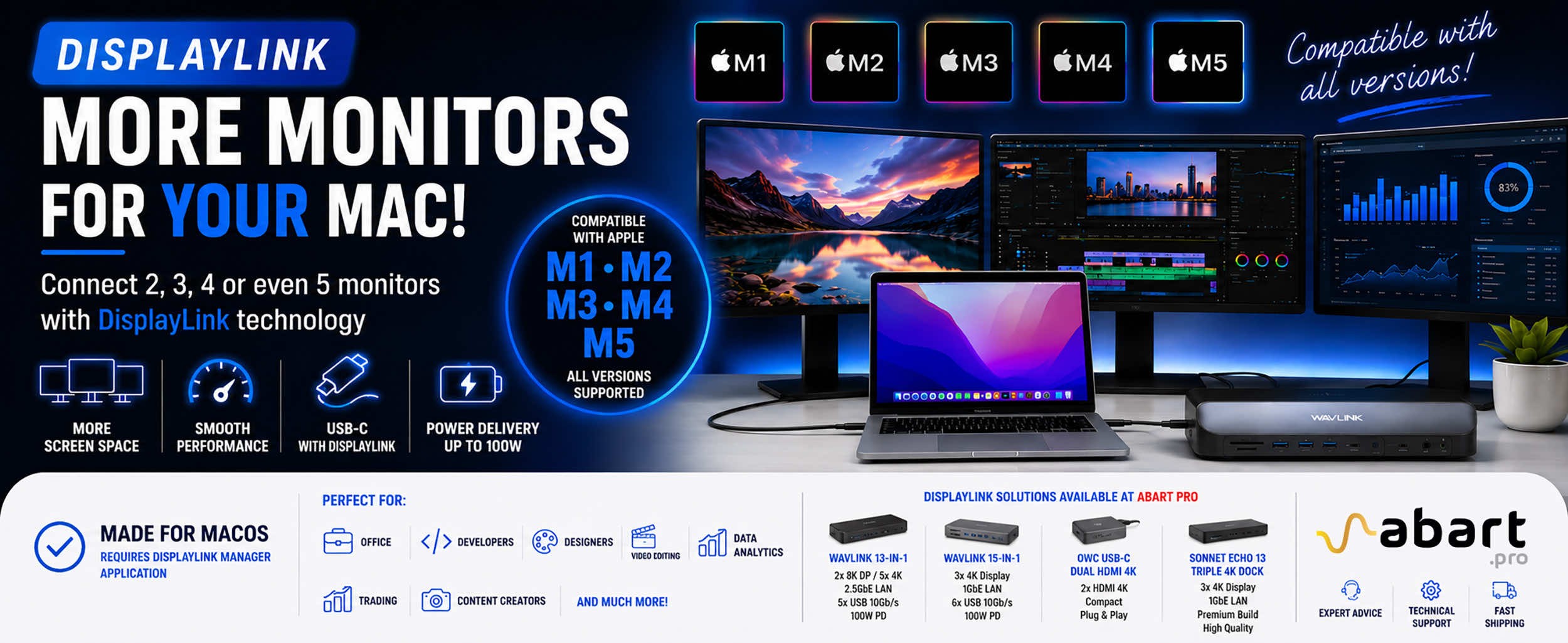 DisplayLink – How to Connect More Monitors to Apple Mac...
DisplayLink is a technology that easily expands the workspace of Apple Mac computers running macOS, PCs running Windows, and devices running ChromeOS and Android without compromising image quality or the performance of your Mac
Blog categories
Search in blog
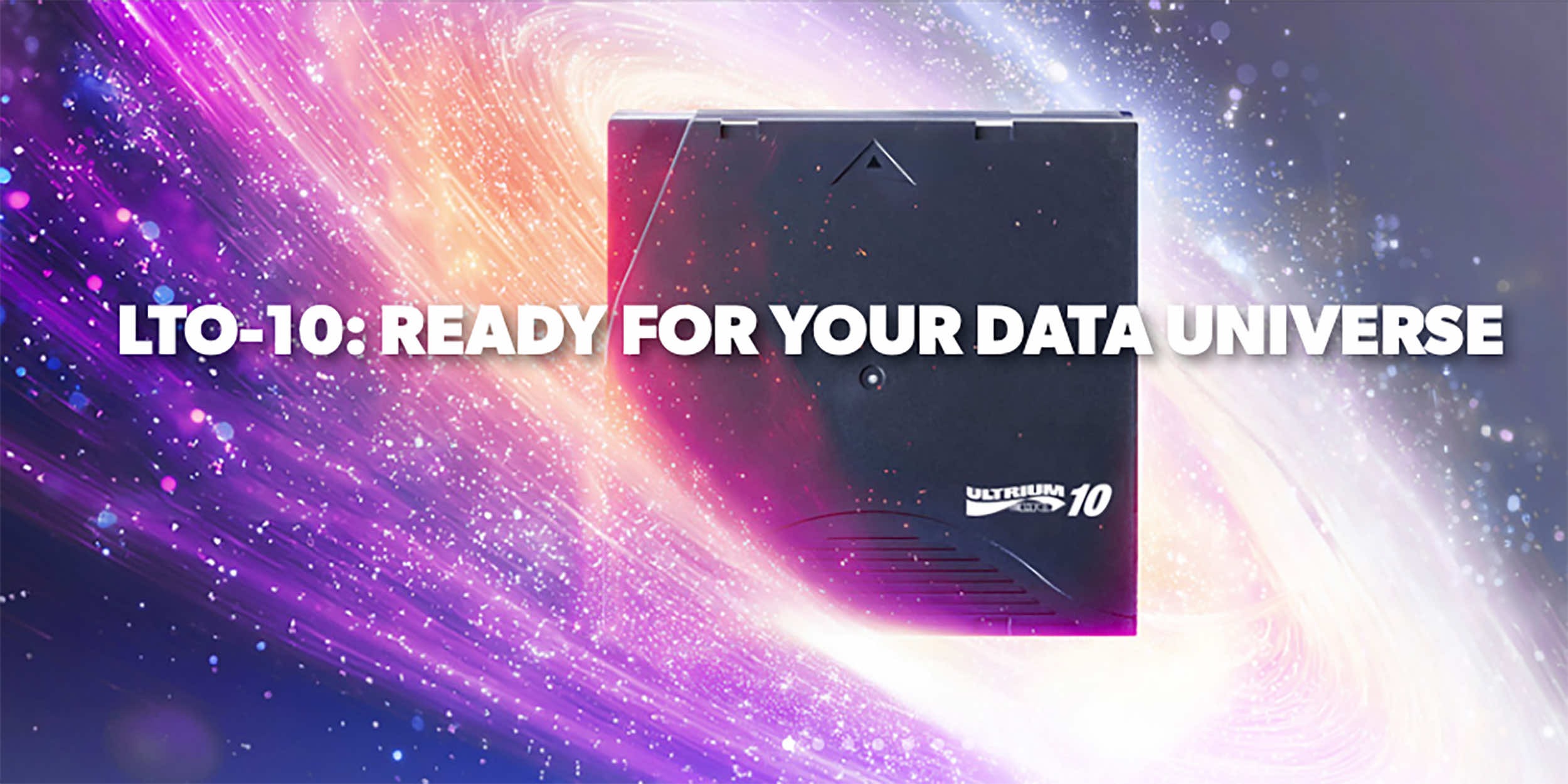
The 10th generation of the LTO standard is coming, offering a storage density of up to 75TB.
Hewlett Packard Enterprise (HP), International Business Machines Corporation (IBM), and Quantum Corporation, technology providers within the LTO Technology Partnership Consortium (TPC), published the specifications for the 10th generation LTO Ultrium format in mid-August, which is now available for licensing.
LTO-10 provides native capacity of 30TB (up to 75TB with 2.5:1 compression) at a native data transfer rate of 400MB/s (+/- 1,200MB/s with compression). LTO-10 offers optimized capacity for customers seeking long-term storage of large amounts of data, allowing them to leverage their existing infrastructure while increasing cost efficiency. The latest LTO standard also provides cyber resilience, data durability in archiving environments, and compatibility with the latest topology, including hybrid cloud. LTO-10 increases usability by eliminating the need for media optimization, as is the case with LTO-9. The LTO-10 interface provides higher bandwidth compatible with modern networks. It also supports the latest quantum-resistant encryption features (AES/GCM256, ready for post-quantum key exchange), WORM, and LTFS.
\"Tape is a widely used data storage technology in various industries, such as public administration, high-energy particle physics, weather forecasting, finance and insurance, media and entertainment. The latest generation of LTO technology effectively leverages the capabilities of the previous generation, providing organizations with an even more efficient solution for their ever-growing data storage needs,\" said Sam Werner, general manager of IBM Storage. “LTO-10 was created to set a new standard in storage capacity, data density, and cost efficiency, and includes post-quantum cryptography certifications for NIST-standardized algorithms designed to protect data in this rapidly evolving era of quantum computing.”
LTO-10 does not offer backward compatibility. It features an innovative head design — making the latest standard incompatible with previous LTO versions — that aims to improve the reliability and performance of the device itself and future generations of LTO drives. LTO-10 is designed to significantly reduce the total cost of archiving by increasing tape capacity by 66.6% compared to LTO-9. The new generation of LTO features increased recording density, thanks in part to advanced Barium Ferrite tape and over 15,000 data tracks. In addition, with LTO-10, users can potentially save hundreds of hours during initial startup by eliminating the media optimization process required with LTO-9. As the world's first tape drive ready for post-quantum cryptography, LTO-10 also provides advanced security during key exchange for reliable data encryption.
“Tape continues to offer one of the best values in data storage, combining low cost with minimal power consumption,” said Phil Goodwin, vice president of research, infrastructure software platforms, IDC. “Furthermore, as cyber threats evolve, tape remains an ideal solution for secure data storage. The many advantages of this technology should not be overlooked as tape evolves and organizations reconfigure their data architectures for the modern era.”
Since the first LTO products were introduced to the market, more than 5.7 million drives, 383 million cartridges, and 649 billion GB of media have been sold, making LTO Ultrium the most popular tape format in history.
According to TechRadar, in 2024, as much as 176.5 exabytes (of compressed data) were shipped to LTO media — a record fourth consecutive wave of growth. In fact, this corresponds to ~70.6 EB of uncompressed data.
However, shortly after the announcement of the new LTO-10 standard, it was met with criticism. Despite the increase in capacity and functionality, the price of the cartridge has increased significantly (USD 275–315). This is more than double the cost per terabyte compared to previous generations, with no significant increase in data write and read speeds.
Additionally, according to Blocks & Files, a disadvantage of LTO-10 is that it offers no compatibility with previous generations. They also believe that the slight increase in speed will be imperceptible during normal operation. Although the latest generation of LTO-10 translates into greater capacity, it raises some concerns about the economic viability of implementing it in new work environments.
Only time will tell whether LTO-10 will catch on in the market. However, the continuous development of LTO technology is inevitable, which, according to analysts, will reach 576TB of native data storage on a single medium in the LTO-14 version.
In the meantime, we invite you to familiarize yourself with our range of LTO drives and media.
Related posts
-
 Nowość! Stacja dokująca od Sonnet z dwoma zatokami na dyski NVMe
Sonnet has released the latest docking station enabling the installation of two PCIe NVMe M.2 2280 drives with a...Read more
Nowość! Stacja dokująca od Sonnet z dwoma zatokami na dyski NVMe
Sonnet has released the latest docking station enabling the installation of two PCIe NVMe M.2 2280 drives with a...Read more -
 Trzy wyświetlacze do Apple Mac z M1/M2/M3? To nie problem!
We know perfectly well how good Apple processors from the M1, M2 and M3 families are. These systems used in Apple...Read more
Trzy wyświetlacze do Apple Mac z M1/M2/M3? To nie problem!
We know perfectly well how good Apple processors from the M1, M2 and M3 families are. These systems used in Apple...Read more -
 OWC Thunderbolt Pro Dock - The best docking station for professional developers
OWC Thunderbolt Pro Dock – high throughput and flexibility for demanding professionals working with high resolution...Read more
OWC Thunderbolt Pro Dock - The best docking station for professional developers
OWC Thunderbolt Pro Dock – high throughput and flexibility for demanding professionals working with high resolution...Read more -
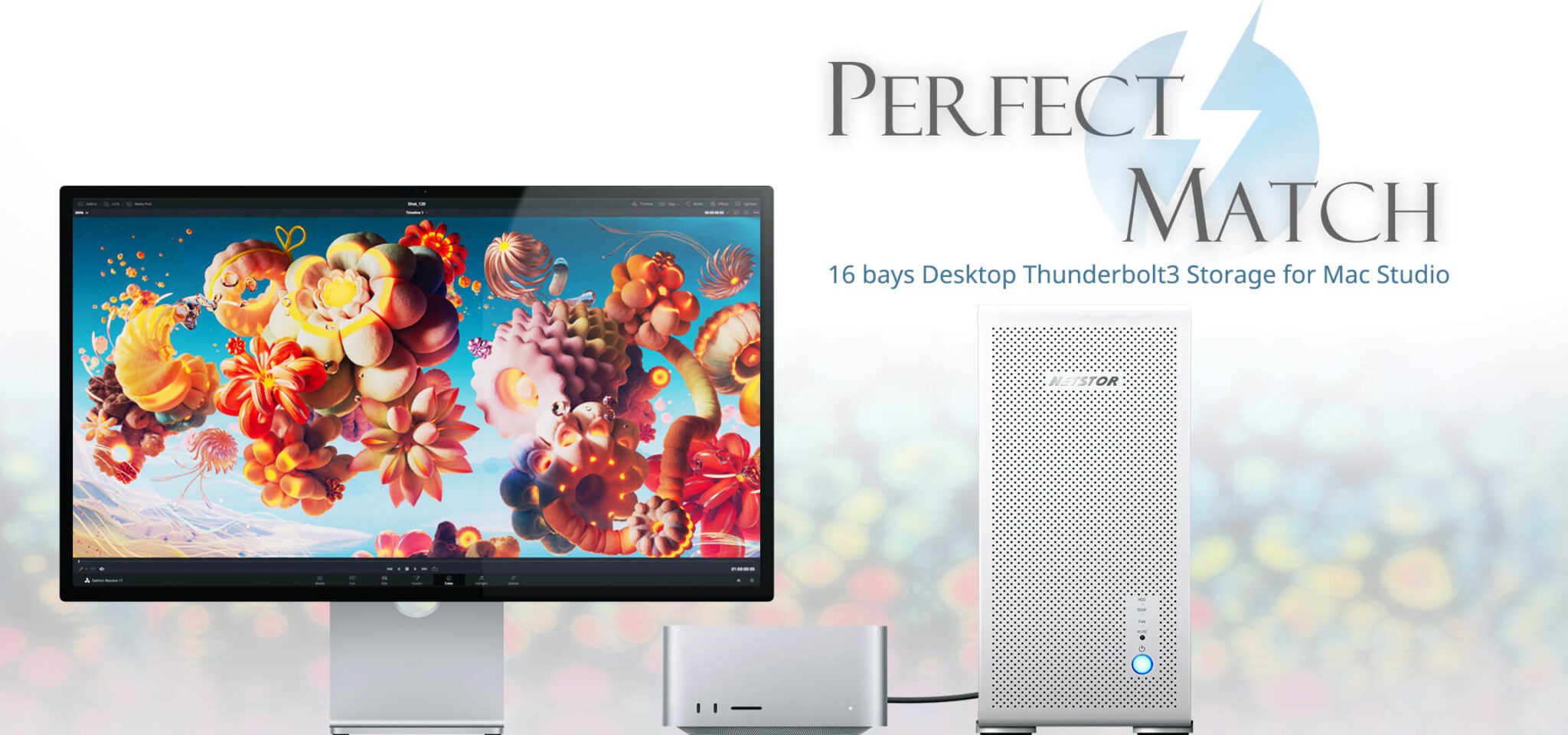 Do 320TB w sprzętowym RAID poprzez port Thunderbolt. Z Mac Studio idealna para!
Netstor NS780TB3 is a 16-bay enclosure that allows you to connect up to 320TB of fast mass storage to a computer...Read more
Do 320TB w sprzętowym RAID poprzez port Thunderbolt. Z Mac Studio idealna para!
Netstor NS780TB3 is a 16-bay enclosure that allows you to connect up to 320TB of fast mass storage to a computer...Read more -
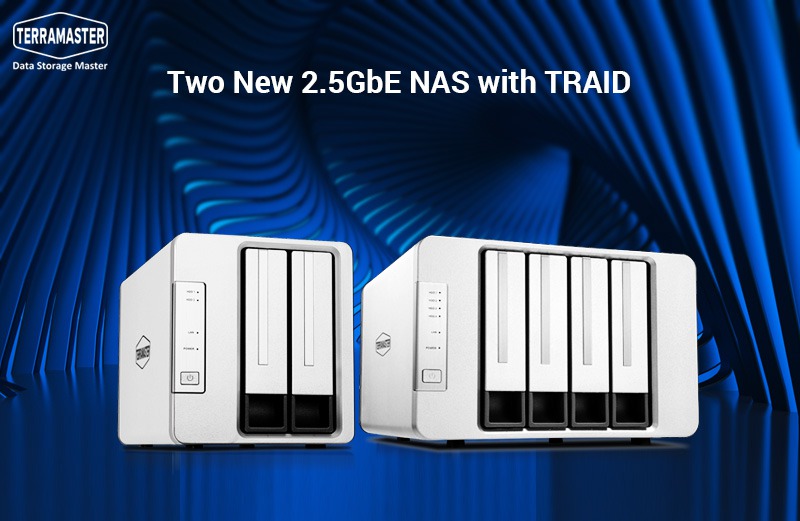 Nowe NASy od TerraMaster z 2x 2,5GbE i zatokami na 2x M.2 SSD
The new TerraMaster F2-223 and F4-223 NAS devices support TRAID. This is a flexible disk array management tool...Read more
Nowe NASy od TerraMaster z 2x 2,5GbE i zatokami na 2x M.2 SSD
The new TerraMaster F2-223 and F4-223 NAS devices support TRAID. This is a flexible disk array management tool...Read more
Leave a comment