
Z naszego bloga
-
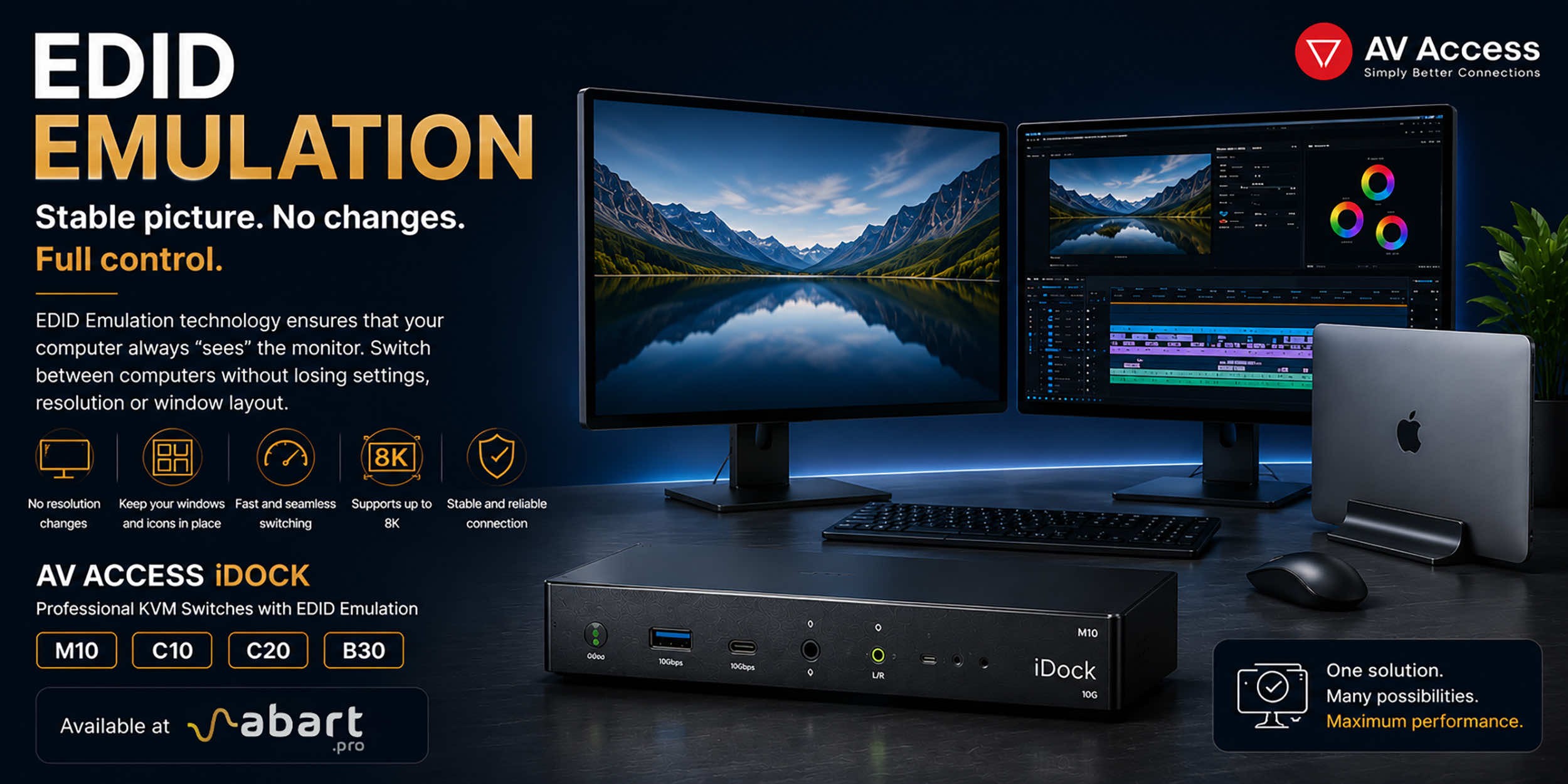 EDID Emulation – What Is It and Why Should You Choose AV...
When working with multiple computers using a KVM switch, one of the most common issues is the need to re-detect the monitor after switching the signal source. This can result in changes to the resolution, icons shifting on the desktop, application windows moving to different locations, and sometimes even a temporary loss of the image. The solution to this problem is EDID Emulation technology, available in professional AV Access iDock KVM switches offered by Abart Pro.
-
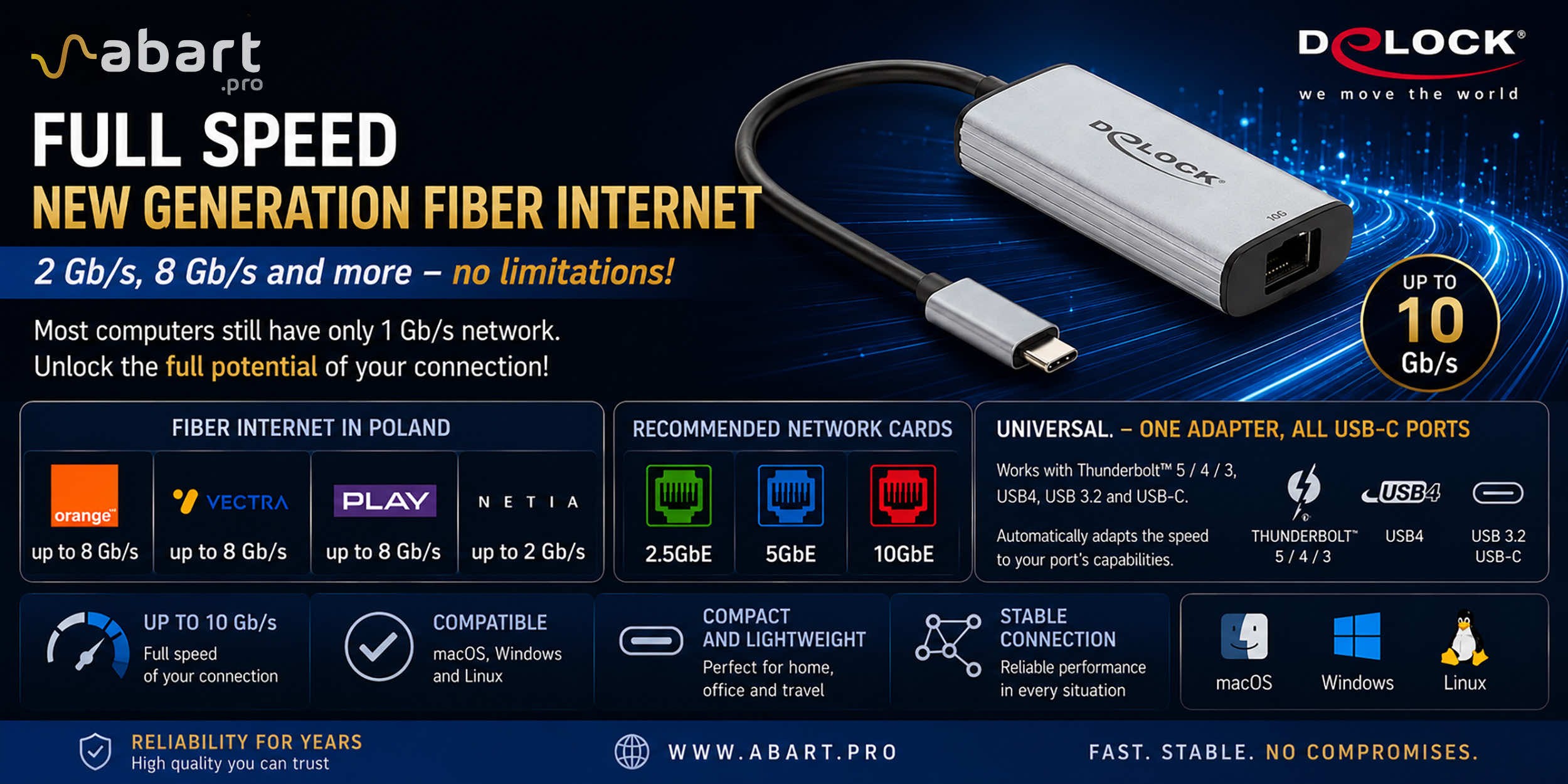 Internet światłowodowy 2 Gb/s, 8 Gb/s i więcej w Polsce –...
Just a few years ago, 1 Gb/s fiber-optic Internet seemed like a solution reserved for the most demanding business users. Today, the situation is completely different. More and more providers in Poland are offering connections exceeding 1 Gb/s, and Internet access with speeds of 2 Gb/s or even 8 Gb/s is becoming a reality for both home users and professionals.
-
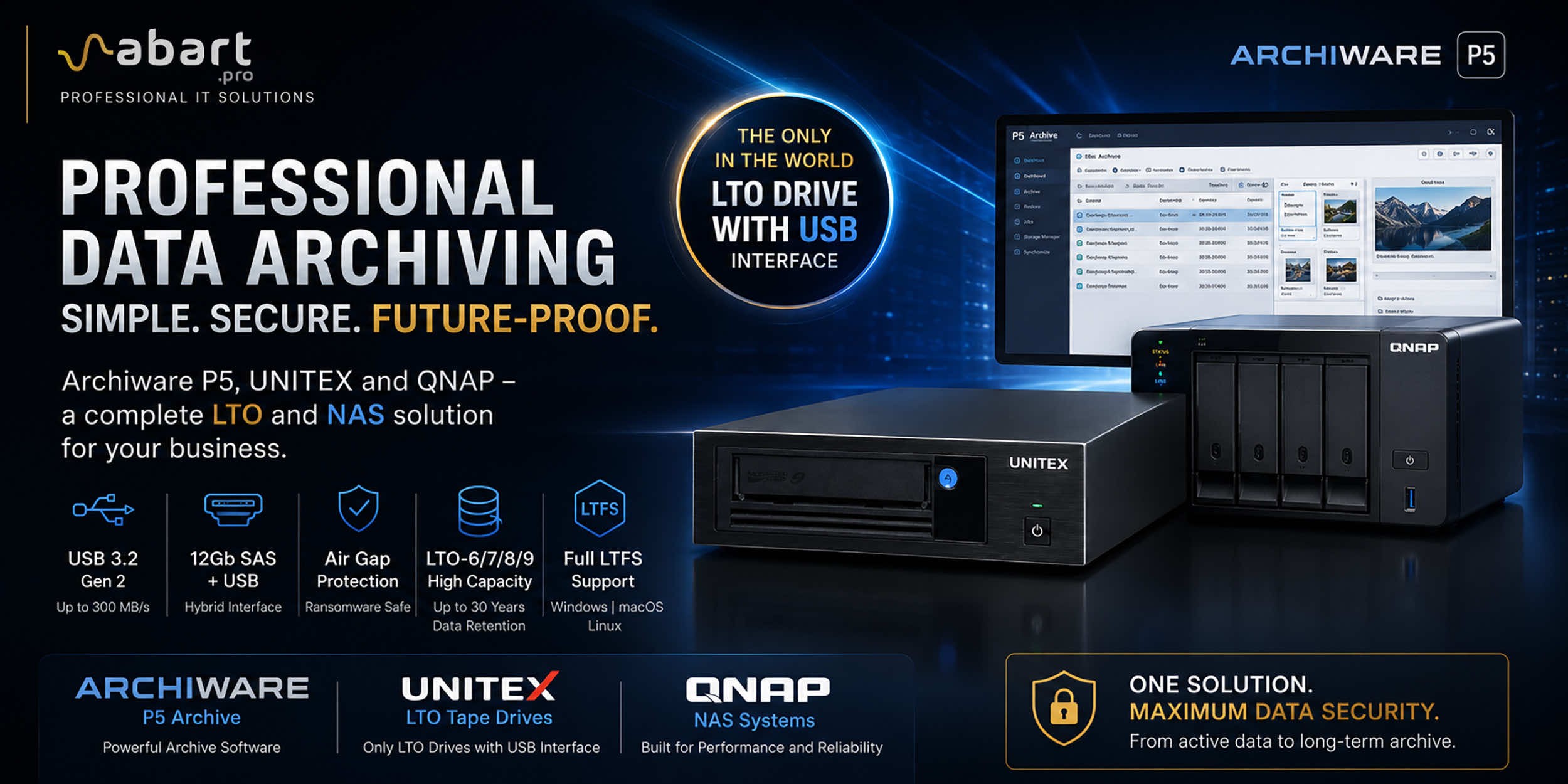 Archiware P5, UNITEX, and QNAP – a complete solution for...
Data Archiving Without Compromise – Archiware P5, UNITEX, and QNAP Create a Comprehensive Data Protection Environment In an era of growing data volumes and increasingly frequent ransomware threats, professional archiving is becoming an essential component of IT infrastructure. Companies involved in film production, photography, CAD design, scientific research, and public administration need a solution that is secure, easy to use, and cost-effective. The combination of Archiware P5 software, UNITEX LTO external drives, and QNAP NAS servers creates a comprehensive environment for long-term data archiving, eliminating many of the limitations of traditional solutions.
-
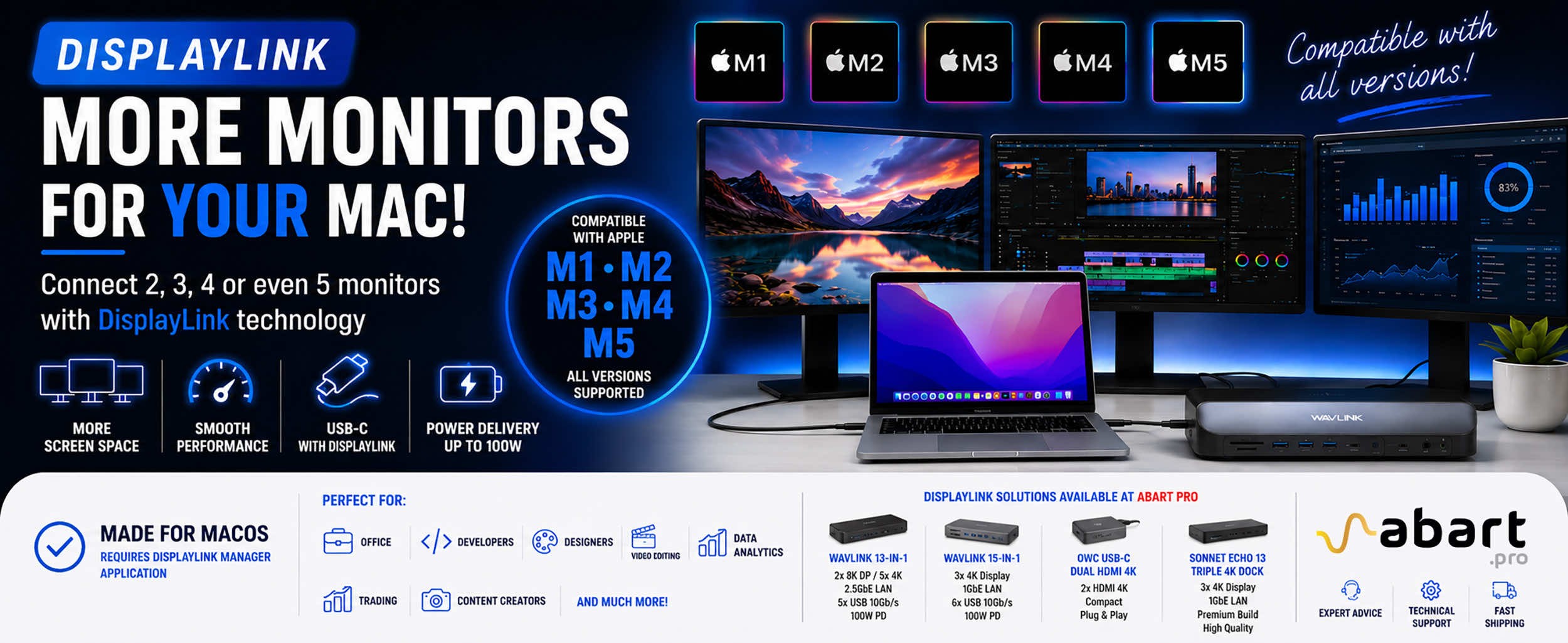 DisplayLink – How to Connect More Monitors to Apple Mac...
DisplayLink is a technology that easily expands the workspace of Apple Mac computers running macOS, PCs running Windows, and devices running ChromeOS and Android without compromising image quality or the performance of your Mac
Blog categories
Search in blog
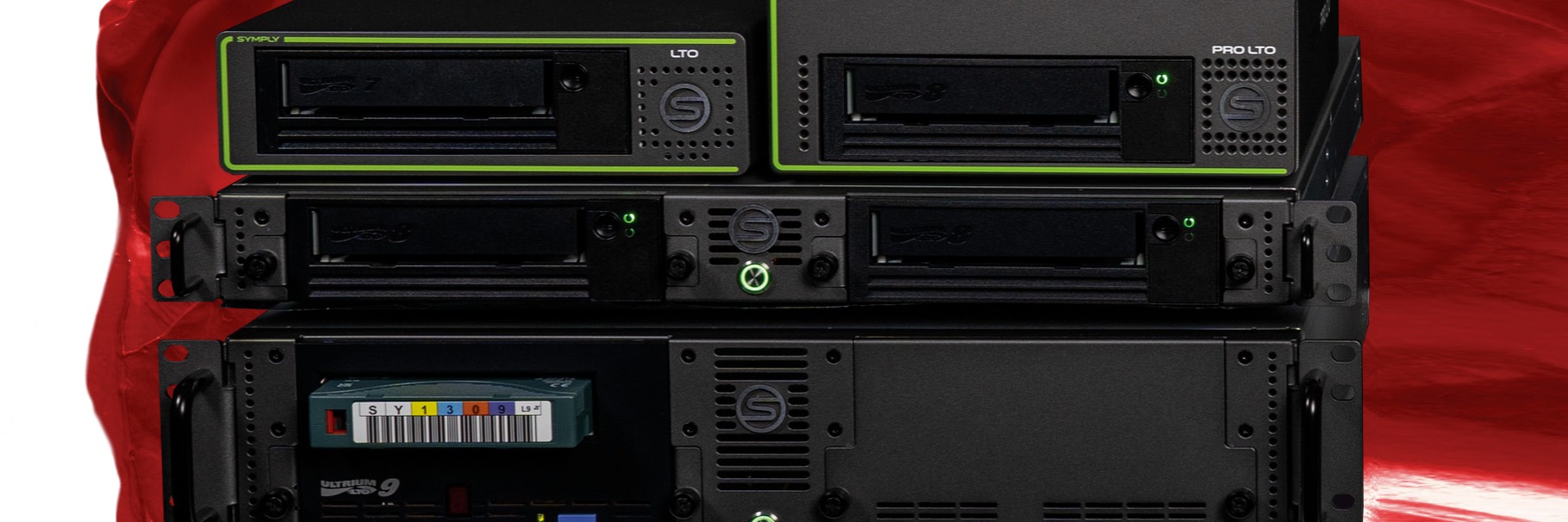
Symply - pioneers in state-of-the-art data storage and LTO archiving solutions
At Symply, they are well aware that many traditional data storage solutions cannot keep up with the evolving needs of modern businesses. With the growth of high-end material, data is growing exponentially and teams are becoming more decentralised. The demands on storage infrastructure have never been greater than now.
This is why Symply takes a future-proof approach, focusing not
on what companies currently want, but on what they really need now and in the future. We at Abart Pro Ltd. agree with Symply's vision of LTO archiving and offer our customers the full range of Symply products.
The storage industry is full of slogans such as: \"Data is the new oil\",
\"Data is either hot or it's not\" and \"Data is the backbone of the digital economy\".
According to various industry reports, the total volume of digital data is expected to exceed 150 zettabytes by 2025. Surprisingly, between 60% and 80% of this data is expected to be cold data, i.e. information that remains unchanged i.e. archived or to which required access is very rare. This poses a
a major challenge for hyperscale data centres, prompting an increased reliance on LTO (Linear Tape Open) archiving. Not surprisingly, hyperscalers are driving the continued growth in popularity of LTO tape, given the growing scale of the ever-increasing data problem.
In the media and entertainment industry, where the accumulation of massive amounts of content is commonplace, this trend comes as no shock. Even small creative businesses can quickly accumulate hundreds of terabytes of data.
In today's digital landscape, the age-old saying 'Death and taxes...'
' can easily be rephrased as 'Death and data loss...'. The reasons for the cause of data loss are varied. These range from corrupted data or file systems to faulty drives or devices. The ever-increasing threat of malicious ransomware attacks is also not negligible. Moreover, human error remains a common factor.
In a world saturated with data, it is often said that there are two types of people:
those who have encountered data loss and those who will.
Without robust data protection measures, data loss is inevitable.
In production and post-production processes, it is important to ensure that a 3-2-1 data policy is followed (three copies of data, stored on at least two different
storage media, with one copy in a separate location from the others).
LTO tape boasts exceptional data integrity. Error correction exceeds that of hard drives by as much as 10,000 times. Additionally, LTO offers significant cost advantages, not only in terms of $/TB, but also in an environmentally friendly process and a significantly lower total cost of ownership (TCO).
These factors make LTO the optimal choice for creating multiple copies of data and ensuring that content remains 'offline' or 'air-gapped', thus protecting against
against ransomware and other malware.
LTO is ideal for securing content at every stage of the creative process, from inception to completion.
So let's start at the beginning of the production process.
LTO is ideal for protecting the source master - the content
captured by the camera onto its flash card. In data terminology, the creation of a
source copy of data is accurately described as an archive, given that the digital content remains unchanged and is intended for long-term storage.
The content moves from production to post-production, a phase that can last from a
A few hours potentially to many years. At this critical stage, protection against data loss becomes a necessity and once again LTO proves invaluable. Here, we use content during processing for backup. It is important to note the differences between backups and archives:
- backups involve creating a copy of the current data to facilitate
restoration in the event of data loss. This process usually takes place incrementally,
with daily backups capturing only changes, rather than creating
completely new copies each day. At the culmination of creative processes, LTO proves invaluable for creating the ultimate master archive.
Utilising its cost-effectiveness and durability, LTO performs the same function as film tape, but offers the added advantage of being an easily accessible digital archive.
Symply LTO solutions include SAS, Thunderbolt and SAS interfaces, and now also 10Gb Ethernet solutions that incorporate the ATTO 8100T Ethernet to SAS Bridge. Symply Ethernet enables disaggregation of standalone or automated LTO solutions from compute platforms, saving the cost of additional LTO hardware, servers and potentially licensed software.
Symply can combine LTO offerings with local S3 object storage appliances for immutable backups and highly scalable and efficient disk archives. At Symply they offer the most comprehensive range of LTO solutions that have been designed with working environments in mind having the added benefit of a great technology partner in the form of ATTO. ATTO goes one step further with their free ATTO 360 driver, making NIC configuration a snap.
At Abart Pro, we recognise that data, data transfer and data storage are critical to many creative environments. That's why we work closely with the best companies in the field. LTO archiving is state-of-the-art equipment from Symply while data transfer in both network and local infrastructure is from ATTO.
Take a look at our offering - Abart Pro - for network, SAS and LTO data archiving solutions.
Related posts
-
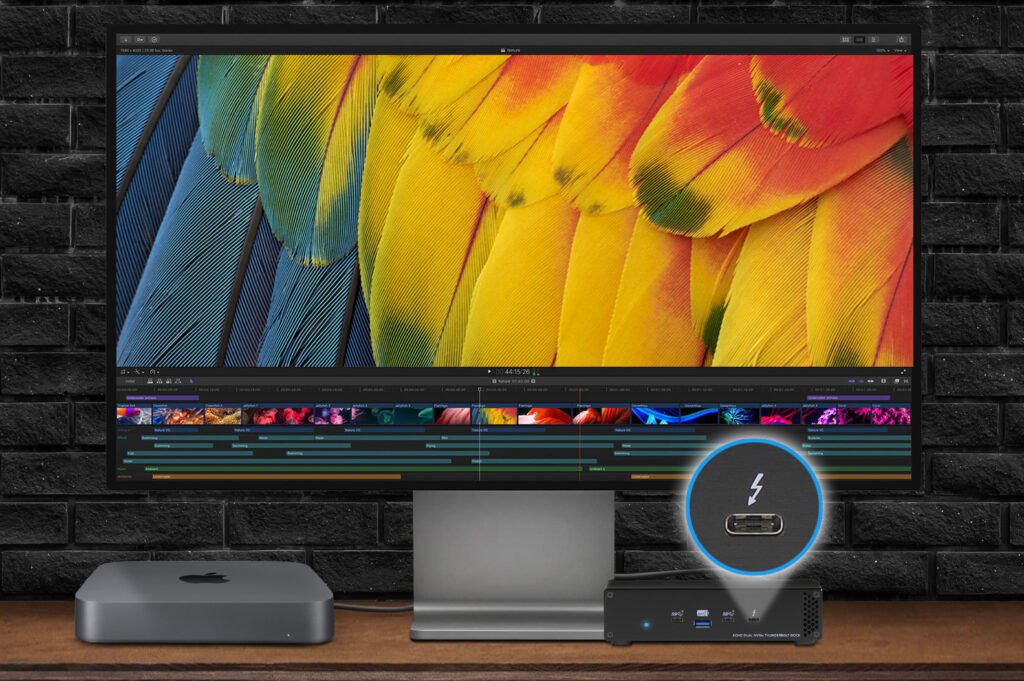 Nowość! Stacja dokująca od Sonnet z dwoma zatokami na dyski NVMe
Sonnet has released the latest docking station enabling the installation of two PCIe NVMe M.2 2280 drives with a...Read more
Nowość! Stacja dokująca od Sonnet z dwoma zatokami na dyski NVMe
Sonnet has released the latest docking station enabling the installation of two PCIe NVMe M.2 2280 drives with a...Read more -
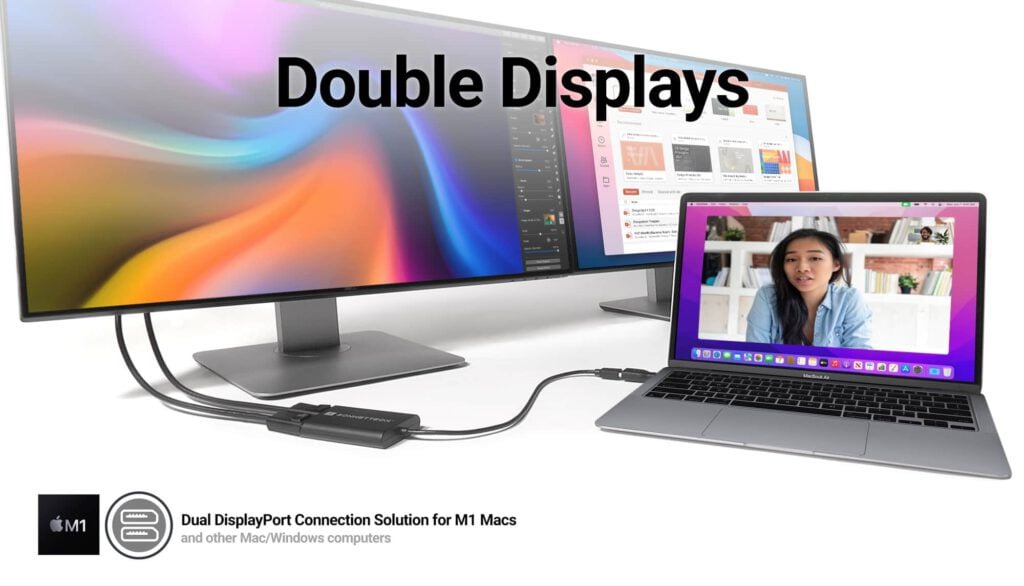 Trzy wyświetlacze do Apple Mac z M1/M2/M3? To nie problem!
We know perfectly well how good Apple processors from the M1, M2 and M3 families are. These systems used in Apple...Read more
Trzy wyświetlacze do Apple Mac z M1/M2/M3? To nie problem!
We know perfectly well how good Apple processors from the M1, M2 and M3 families are. These systems used in Apple...Read more -
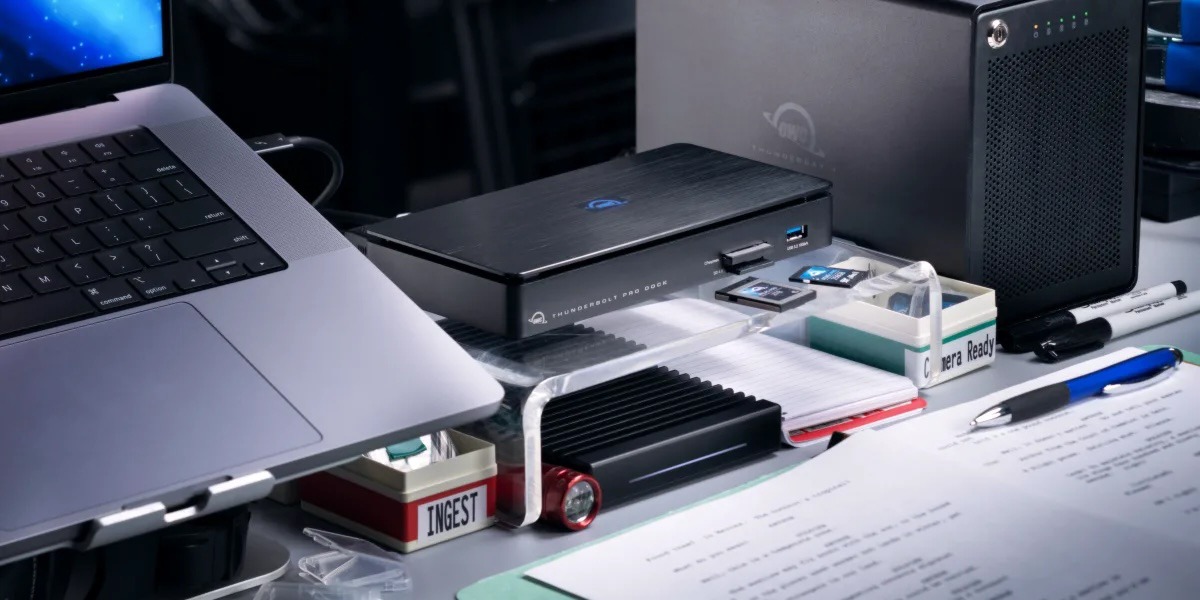 OWC Thunderbolt Pro Dock - The best docking station for professional developers
OWC Thunderbolt Pro Dock – high throughput and flexibility for demanding professionals working with high resolution...Read more
OWC Thunderbolt Pro Dock - The best docking station for professional developers
OWC Thunderbolt Pro Dock – high throughput and flexibility for demanding professionals working with high resolution...Read more -
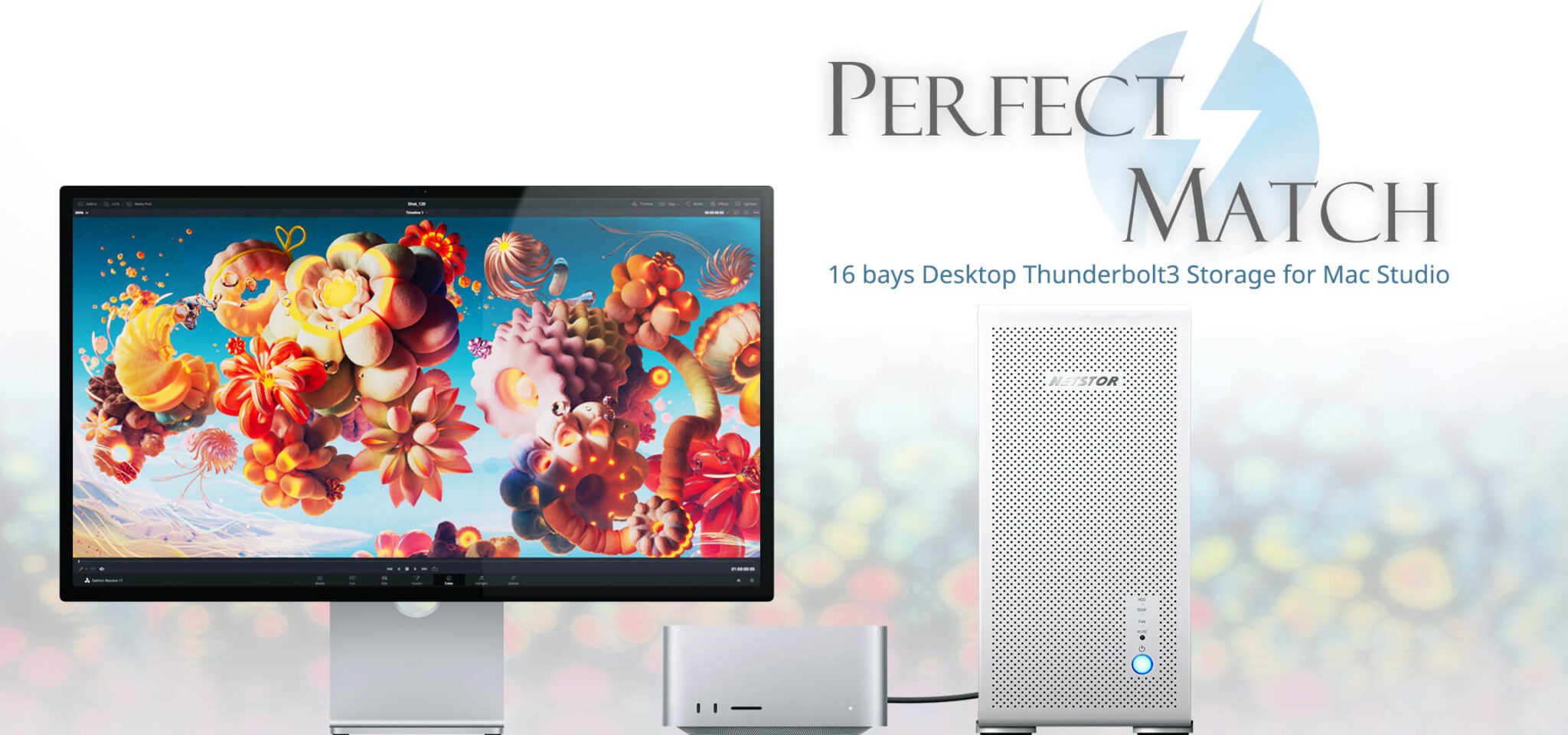 Do 320TB w sprzętowym RAID poprzez port Thunderbolt. Z Mac Studio idealna para!
Netstor NS780TB3 is a 16-bay enclosure that allows you to connect up to 320TB of fast mass storage to a computer...Read more
Do 320TB w sprzętowym RAID poprzez port Thunderbolt. Z Mac Studio idealna para!
Netstor NS780TB3 is a 16-bay enclosure that allows you to connect up to 320TB of fast mass storage to a computer...Read more -
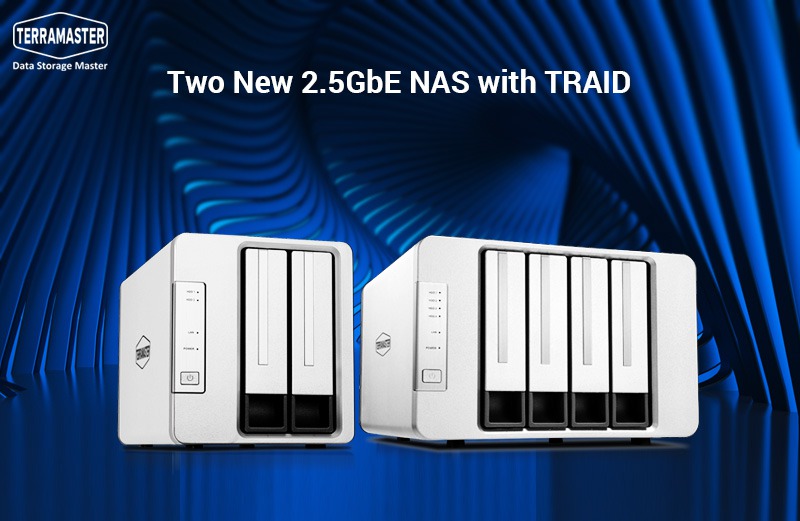 Nowe NASy od TerraMaster z 2x 2,5GbE i zatokami na 2x M.2 SSD
The new TerraMaster F2-223 and F4-223 NAS devices support TRAID. This is a flexible disk array management tool...Read more
Nowe NASy od TerraMaster z 2x 2,5GbE i zatokami na 2x M.2 SSD
The new TerraMaster F2-223 and F4-223 NAS devices support TRAID. This is a flexible disk array management tool...Read more
Leave a comment