
Z naszego bloga
-
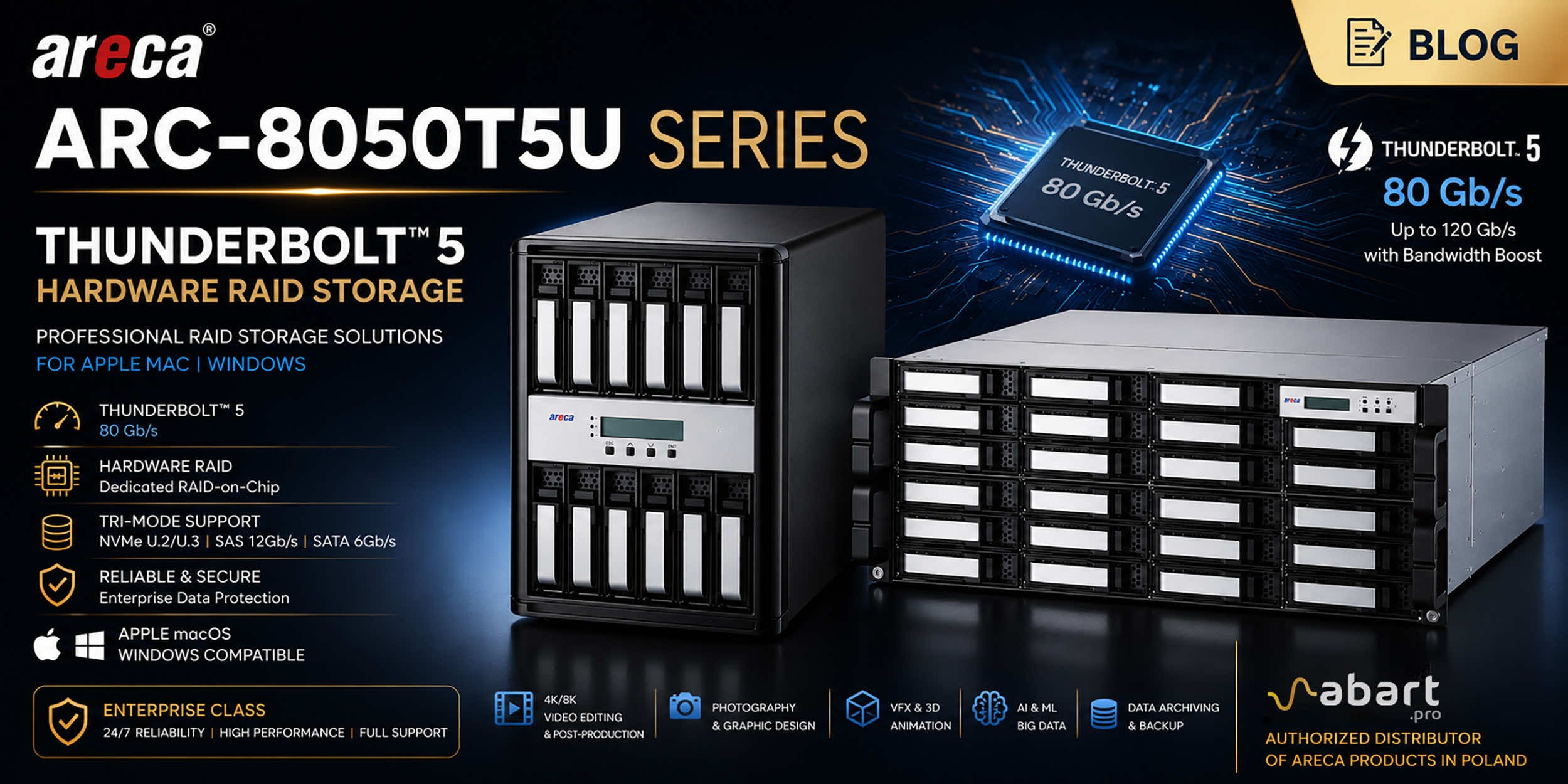 Thunderbolt™ 5 and Hardware RAID – Why Is the Areca...
Professional storage enters a new era. Just a few years ago, most professional Apple users opted for external SSDs or simple RAID enclosures connected via Thunderbolt 3. These solutions were sufficient for working with Full HD footage or individual 4K projects, but the advancement of digital cameras, high-resolution photography, and increasingly demanding applications has led to a significant rise in storage requirements.
-
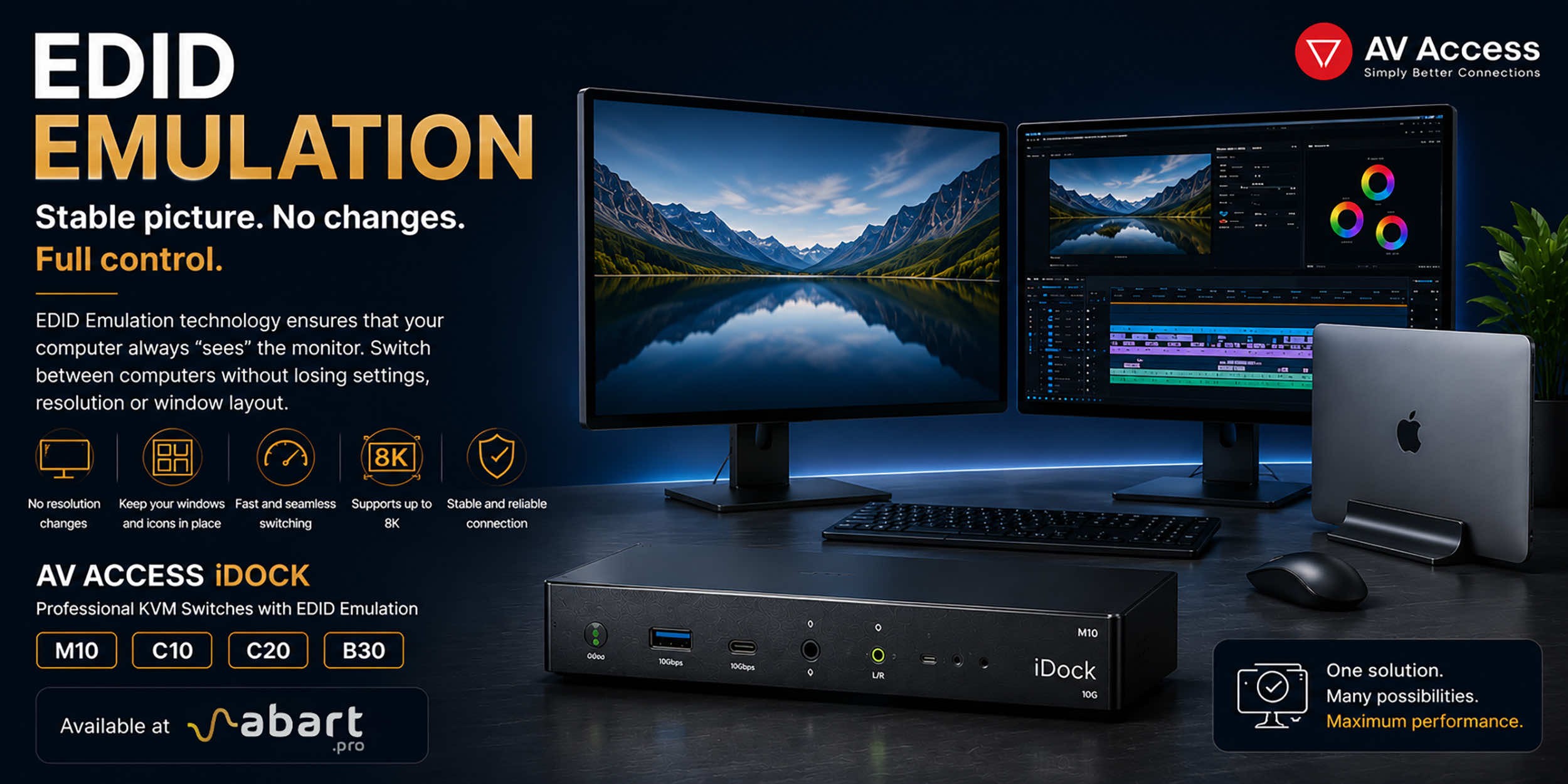 EDID Emulation – What Is It and Why Should You Choose AV...
When working with multiple computers using a KVM switch, one of the most common issues is the need to re-detect the monitor after switching the signal source. This can result in changes to the resolution, icons shifting on the desktop, application windows moving to different locations, and sometimes even a temporary loss of the image. The solution to this problem is EDID Emulation technology, available in professional AV Access iDock KVM switches offered by Abart Pro.
-
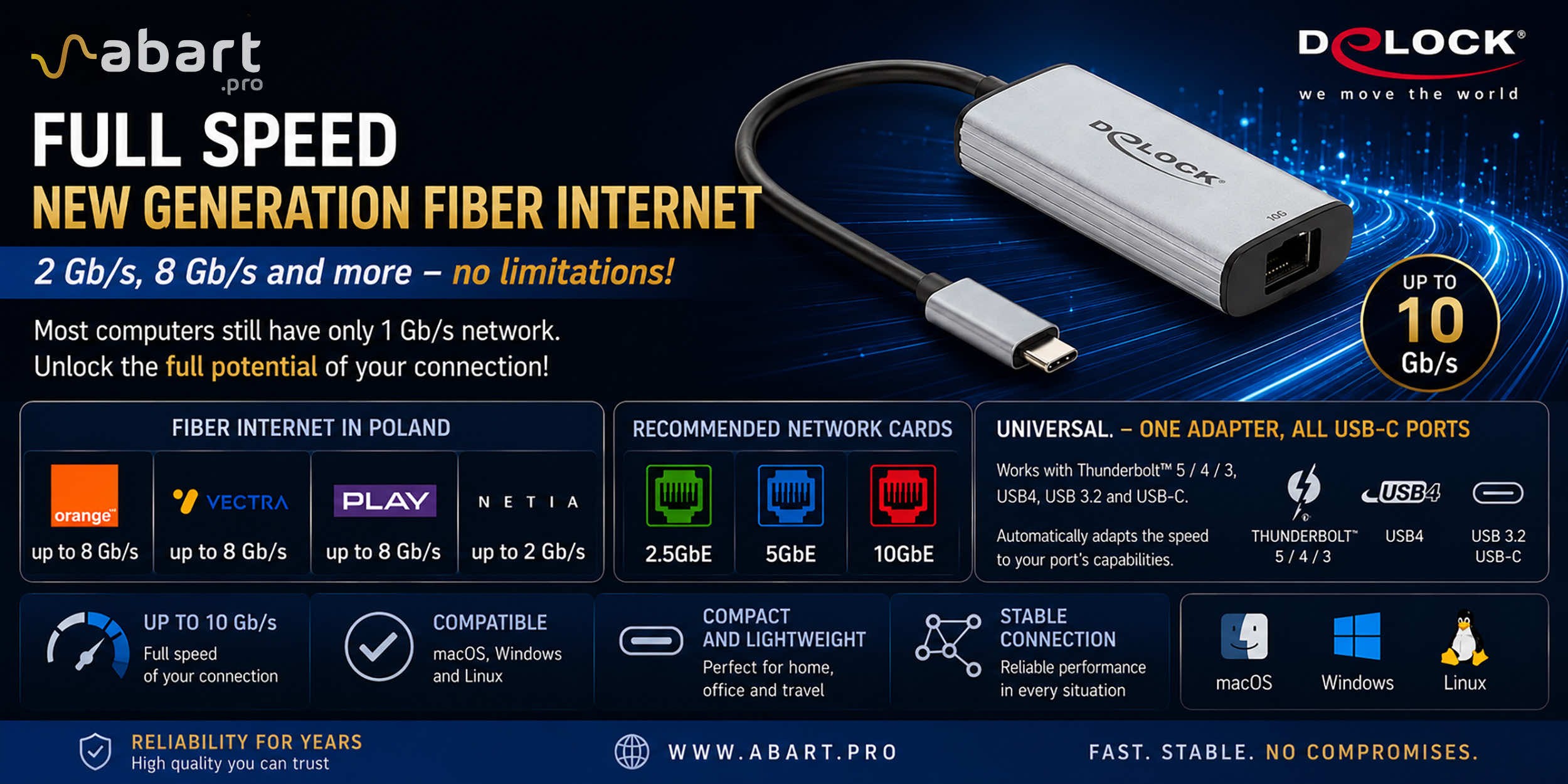 Internet światłowodowy 2 Gb/s, 8 Gb/s i więcej w Polsce –...
Just a few years ago, 1 Gb/s fiber-optic Internet seemed like a solution reserved for the most demanding business users. Today, the situation is completely different. More and more providers in Poland are offering connections exceeding 1 Gb/s, and Internet access with speeds of 2 Gb/s or even 8 Gb/s is becoming a reality for both home users and professionals.
-
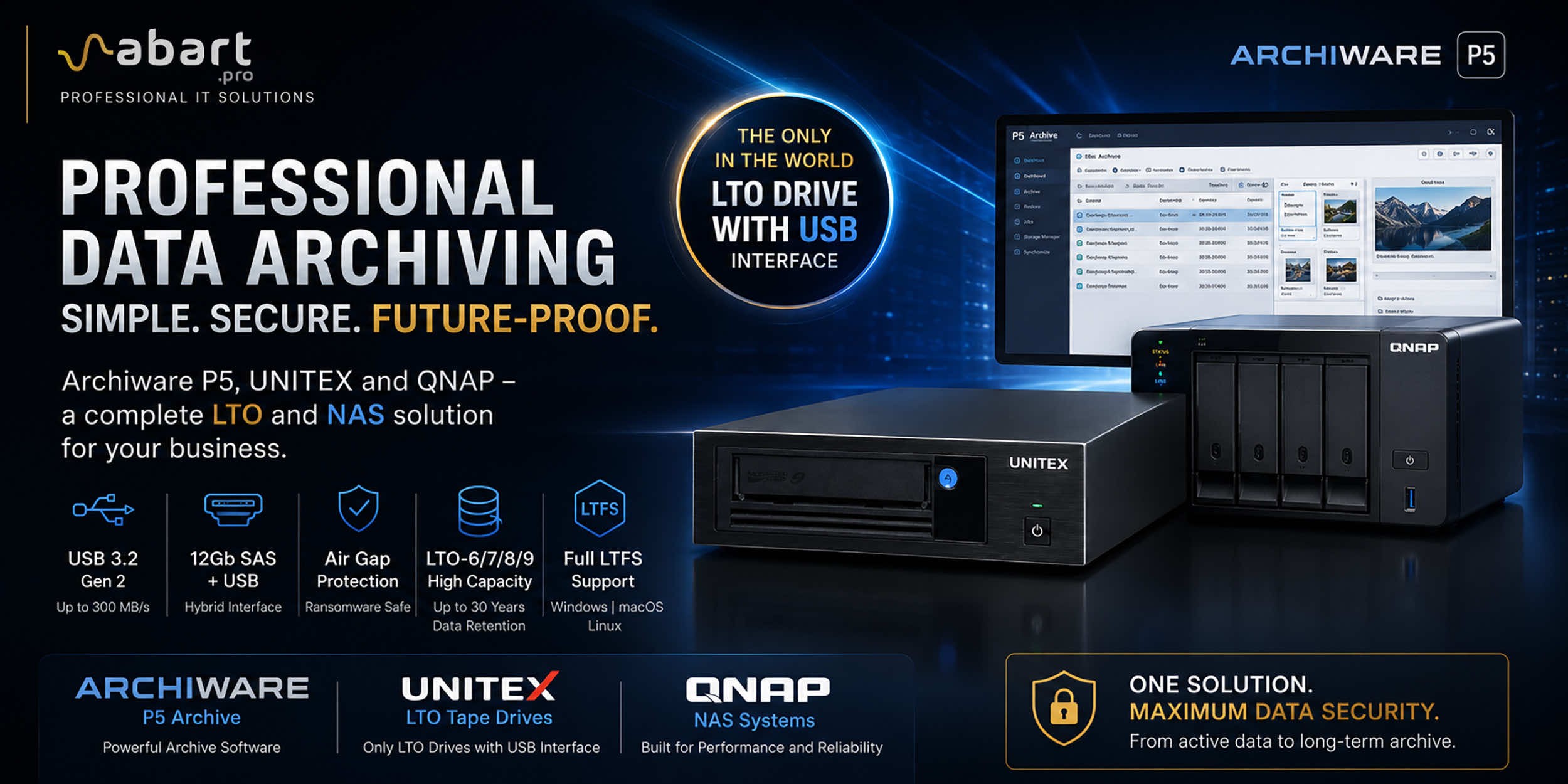 Archiware P5, UNITEX, and QNAP – a complete solution for...
Data Archiving Without Compromise – Archiware P5, UNITEX, and QNAP Create a Comprehensive Data Protection Environment In an era of growing data volumes and increasingly frequent ransomware threats, professional archiving is becoming an essential component of IT infrastructure. Companies involved in film production, photography, CAD design, scientific research, and public administration need a solution that is secure, easy to use, and cost-effective. The combination of Archiware P5 software, UNITEX LTO external drives, and QNAP NAS servers creates a comprehensive environment for long-term data archiving, eliminating many of the limitations of traditional solutions.
Blog categories
Search in blog
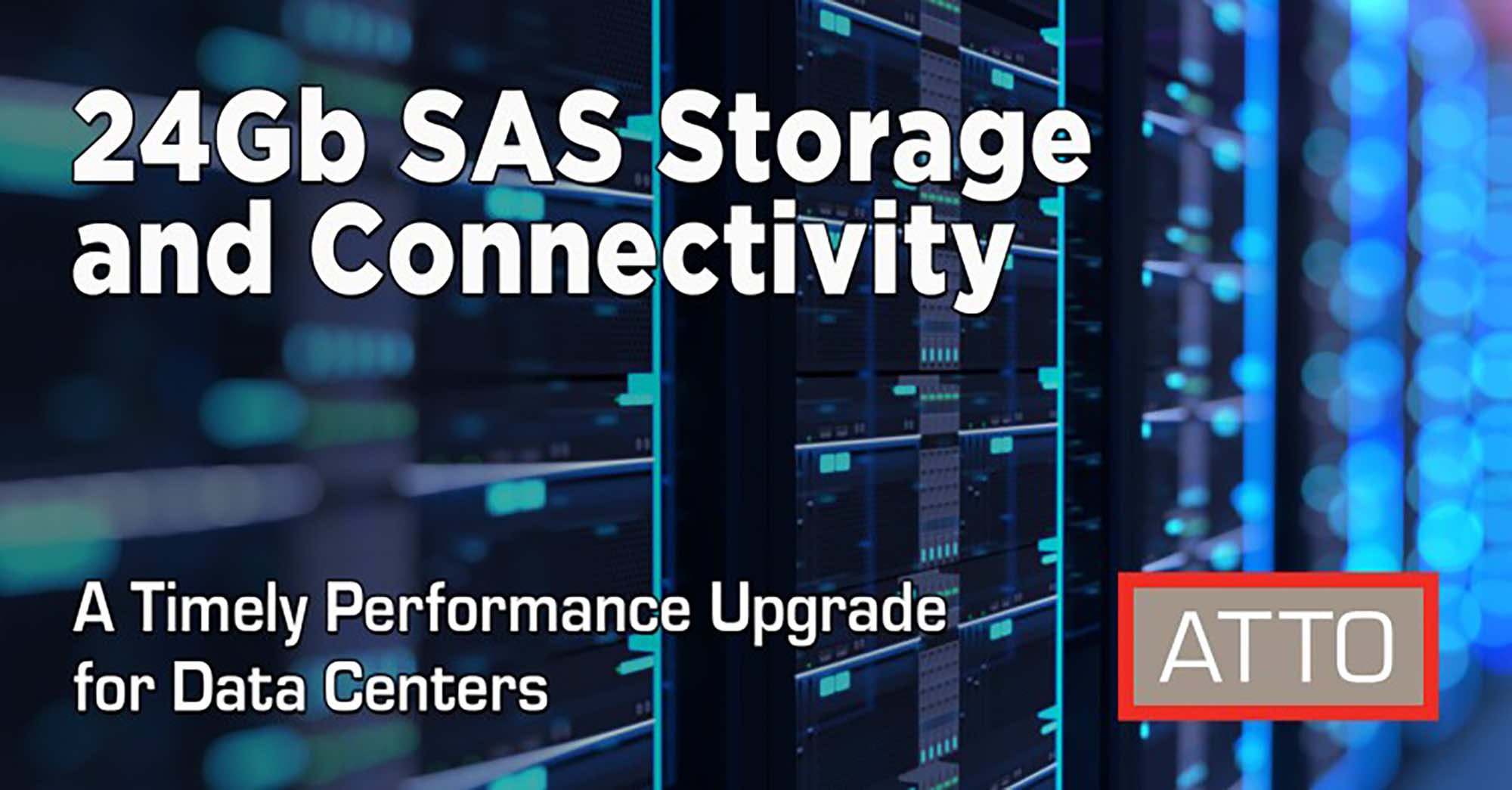
Upgrading to 24Gb/s SAS HBA controller cards is a big performance boost for data centers for a relatively small investment.
Data centers face increasing challenges in managing and processing large amounts of data efficiently, reliably and cost-effectively. For years, SAS storage has been the standard, providing the capacity and performance needed to support daily data center operations. To keep up with the rapid pace of innovation in data storage technology, the SAS interface is evolving to meet the latest challenges with the availability of 24 Gb/s data transfer. Upgrading to 24 Gb/s SAS – even if it's simply upgrading HBA controller cards while maintaining existing 12 Gb/s SAS storage – has a significant, positive impact on performance, especially for data centers with high data-intensive workloads.
The cornerstone of this powerful connection is the extraordinary increase in data transfer speeds. 24Gb/s SAS SSDs take advantage of the fast read and write capabilities of SSD technology, while 24Gb/s SAS HBAs double the throughput compared to 12Gb/s SAS. Together, they offer unparalleled levels of data throughput, reducing read and write latency, and thus enabling near-instantaneous access to data regardless of the size of the pool or stream.
The hidden advantage of SAS storage that makes it the most budget-friendly, powerful tool in high-end IT storage design is that it offers a consistent upgrade path with significant benefits, but without the need to upgrade the system fabric to a different hardware platform . To achieve the full benefits, users can upgrade everything in one architecture, from the HBA to the storage array and drives. However, a more cost-effective approach that some of our customers are pursuing is to maintain their existing 12Gb/s storage while upgrading their HBA SAS controller cards to the latest 24Gb/s standard with PCIe Gen4 x16 host connectivity.
The 24 Gb/s SAS standard effectively achieves a performance double (22.6 Gb/s link speed) over the current 12 Gb/s standard thanks to an innovative encoding and error correction scheme. “Packet-mode encoding provides increased performance while maintaining full backward compatibility and maintaining complete security.
Internal performance testing of 24Gb/s SAS SSDs with 24Gb/s SAS HBAs yields exceptionally positive results. They observe significant performance gains compared to 12Gb/s SAS drives. Performance is almost 100% higher for sequential reads, while write performance increases by over 100%, and the larger the disk capacity, the greater this difference. Random read performance increases by almost 50%, while random write performance can significantly exceed this value.
The 24Gb/s SAS interface is designed to provide flexibility by adapting to changing data storage and processing requirements. Thanks to backward compatibility, data centers can move forward without having to upgrade the entire infrastructure. All of this is good news for architects looking to the future and wondering how they will manage workloads that require more and more flexible and fast resources.
Energy efficiency has become a key issue in data centers, and the 24Gb/s SAS interface was designed with this in mind. As we know, reducing energy consumption is not only environmentally friendly, but also translates into cost savings.
Last, but certainly not least, is that when you upgrade to 24Gb/s SAS, you gain state-of-the-art management and monitoring capabilities. As important as the hardware itself, these features simplify infrastructure administration and maintenance, allowing IT staff to focus on strategic tasks while reducing the overhead costs associated with routine management.
Overall, moving to 24Gb/s SAS - even if it's simply an upgrade to the HBAs themselves while maintaining existing 12Gb/s storage - will have a significant, positive impact on performance, especially for data centers with data-intensive workloads. This is a great return on investment. Impressive increases in data transfer speeds, optimized workload handling, scalability, data integrity features, energy efficiency and advanced management features will enable IT professionals to meet the ever-increasing
Related posts
-
 Nowość! Stacja dokująca od Sonnet z dwoma zatokami na dyski NVMe
Sonnet has released the latest docking station enabling the installation of two PCIe NVMe M.2 2280 drives with a...Read more
Nowość! Stacja dokująca od Sonnet z dwoma zatokami na dyski NVMe
Sonnet has released the latest docking station enabling the installation of two PCIe NVMe M.2 2280 drives with a...Read more -
 Trzy wyświetlacze do Apple Mac z M1/M2/M3? To nie problem!
We know perfectly well how good Apple processors from the M1, M2 and M3 families are. These systems used in Apple...Read more
Trzy wyświetlacze do Apple Mac z M1/M2/M3? To nie problem!
We know perfectly well how good Apple processors from the M1, M2 and M3 families are. These systems used in Apple...Read more -
 OWC Thunderbolt Pro Dock - The best docking station for professional developers
OWC Thunderbolt Pro Dock – high throughput and flexibility for demanding professionals working with high resolution...Read more
OWC Thunderbolt Pro Dock - The best docking station for professional developers
OWC Thunderbolt Pro Dock – high throughput and flexibility for demanding professionals working with high resolution...Read more -
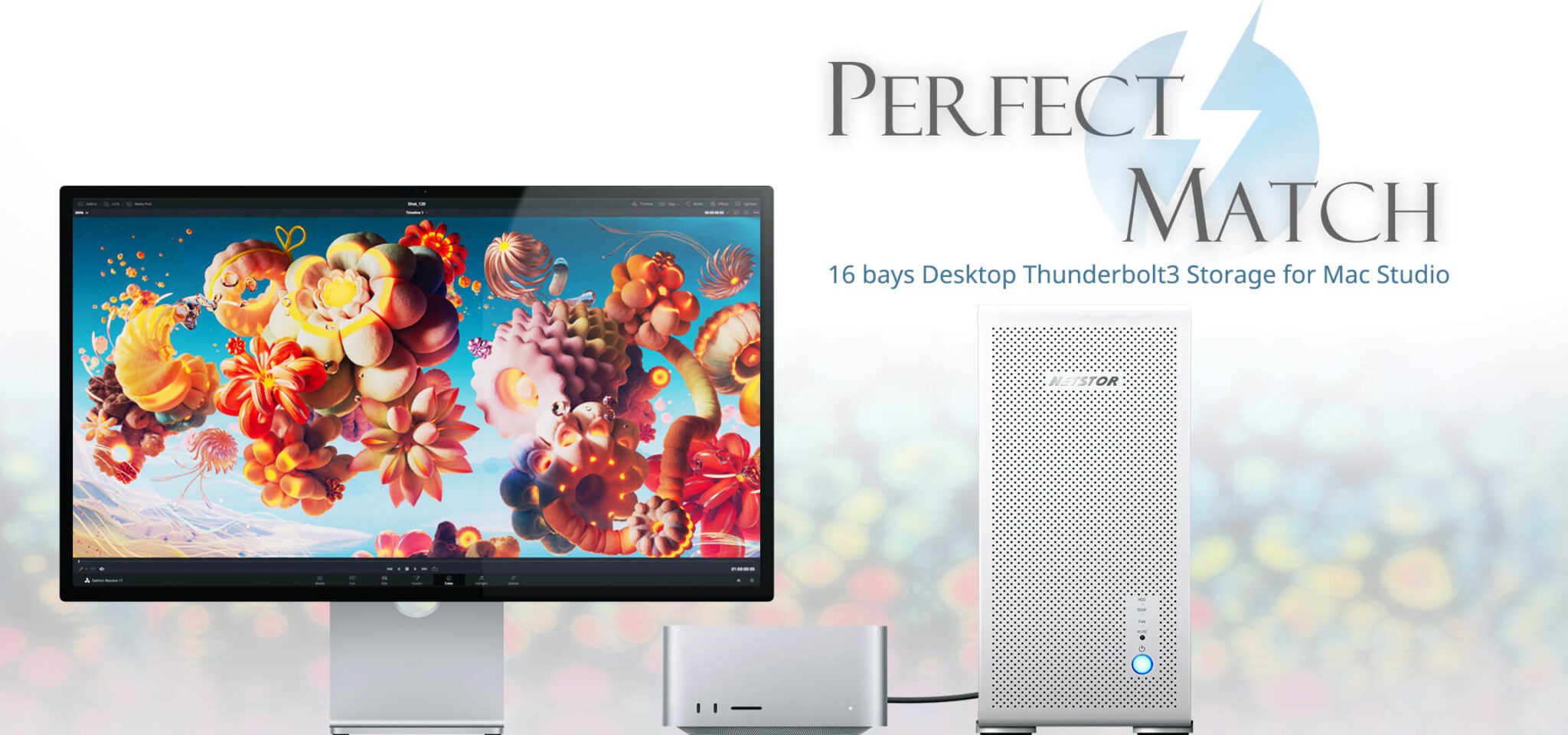 Do 320TB w sprzętowym RAID poprzez port Thunderbolt. Z Mac Studio idealna para!
Netstor NS780TB3 is a 16-bay enclosure that allows you to connect up to 320TB of fast mass storage to a computer...Read more
Do 320TB w sprzętowym RAID poprzez port Thunderbolt. Z Mac Studio idealna para!
Netstor NS780TB3 is a 16-bay enclosure that allows you to connect up to 320TB of fast mass storage to a computer...Read more -
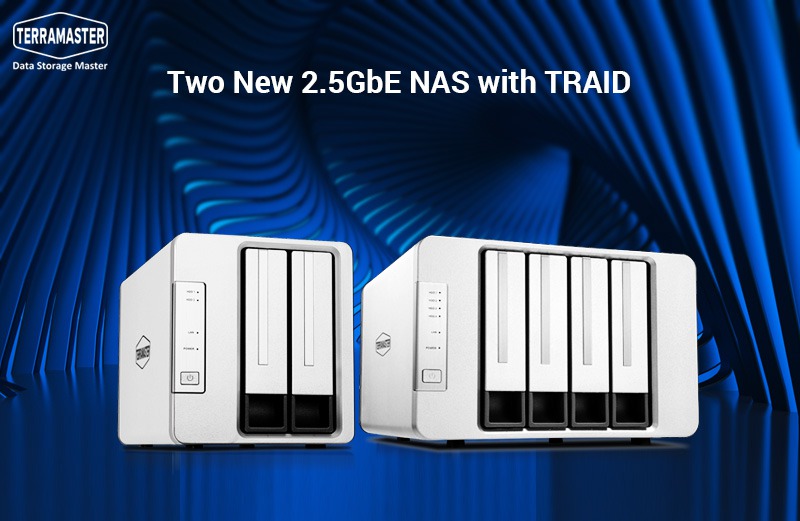 Nowe NASy od TerraMaster z 2x 2,5GbE i zatokami na 2x M.2 SSD
The new TerraMaster F2-223 and F4-223 NAS devices support TRAID. This is a flexible disk array management tool...Read more
Nowe NASy od TerraMaster z 2x 2,5GbE i zatokami na 2x M.2 SSD
The new TerraMaster F2-223 and F4-223 NAS devices support TRAID. This is a flexible disk array management tool...Read more
Leave a comment